
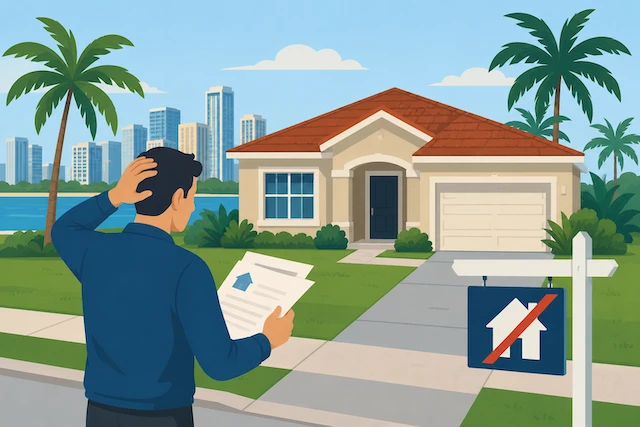
Foreclosure starts when you fall behind on your mortgage payments and your lender begins legal proceedings to take back the property. In Florida, the process follows a specific legal path — and it moves slower than in many other states, which actually gives you more time to act.
Florida is a judicial foreclosure state, meaning every foreclosure must go through the court system. That process typically takes several months, sometimes longer. While that timeline gives you room to explore your options, doing nothing is the one choice that guarantees the worst outcome.
The earlier you act, the more options you have. Waiting until the final stages limits what is possible and puts you in a much weaker position financially.
How Long Does Foreclosure Take in Florida?
On average, the foreclosure process in Florida takes roughly six to eight months from the first missed payment to the final auction. However, delays, court backlogs, and lender timelines can push that even further.
Here is a general breakdown of how the timeline unfolds:
- Missed payments: Lenders typically begin outreach after 90 days of missed payments.
- Notice of Default: Your lender files a formal notice, which is recorded publicly.
- Lis Pendens: The lender files a lawsuit to begin the foreclosure process in court.
- Foreclosure judgment: A court decides whether the lender can proceed with the sale.
- Auction or sale: The property is sold at a public auction or returned to the lender.
Each stage creates an opportunity to take action. Selling your house before the process reaches a judgment is almost always better than letting it run its course.
What Foreclosure Actually Costs You
Many homeowners focus only on losing the house, but the financial damage of foreclosure extends far beyond that.
Credit Impact
A foreclosure stays on your credit report for seven years. It can drop your credit score by 100 points or more, making it difficult to qualify for another mortgage, car loan, or even certain jobs for years to come.
Deficiency Judgments
In Florida, lenders can pursue a deficiency judgment. That means if your home sells at auction for less than what you owe, the lender can legally come after you for the difference. This is not automatic in every case, but it is a real risk that many homeowners do not expect.
Tax Consequences
Forgiven debt can sometimes be treated as taxable income. If your lender forgives a portion of your mortgage balance, you may face a tax bill you were not planning for.
Emotional Toll
Beyond the numbers, foreclosure takes a personal toll. The public nature of the process, the uncertainty, and the impact on your family are all things that weigh heavily. Taking control of the situation early helps reduce all of it.
Selling Your House Before Foreclosure Is a Real Option
You do not have to wait for the bank to take your home. Selling the property before foreclosure completes is one of the most effective ways to minimize damage and move forward.
A traditional sale requires time, repairs, staging, and buyer financing — none of which are ideal when the clock is already running. A direct cash sale removes most of those obstacles.
Instead of listing with an agent and hoping a buyer comes through with financing, you can work with a cash buyer who evaluates your home as-is and makes a straightforward offer. If the numbers work for you, you close on your timeline and use the proceeds to pay off the mortgage and move on.
This approach is especially useful when time is limited and the property needs work. A home facing foreclosure often has deferred maintenance, outstanding issues, or other complications that make a traditional listing even more difficult.
How a Cash Sale Works When Facing Foreclosure
The process is designed to be fast and simple, which matters when you are working against a legal timeline.
Step 1: Contact a cash buyer. Share your property address and basic information about the situation.
Step 2: Receive an offer. A cash buyer evaluates the home in its current condition and presents a no-obligation offer. There is no pressure to accept.
Step 3: Choose your closing date. If you accept, you pick when to close. Cash transactions do not depend on lender approvals or mortgage underwriting, so closing can happen much faster than a traditional sale.
Step 4: Close and move forward. At closing, the mortgage is paid off, and any remaining proceeds go to you. The foreclosure process stops.
The speed of this process is one of its biggest advantages. When your lender has already filed a lis pendens or you are approaching a court date, every week matters.
Can You Sell a House in Foreclosure?
Yes. Even after the foreclosure process has started, you can still sell the property. In most cases, you can sell right up until the foreclosure auction date.
Selling during foreclosure — rather than before it begins — is more complicated, but it is not impossible. The key is understanding how much you still owe, what the home is worth, and whether a sale can cover enough of the mortgage balance to make sense.
This is also where having a straightforward buyer helps. Traditional buyers backed by financing may not want to deal with the complications of a property in active foreclosure. A cash buyer who understands the process can navigate these situations more effectively.
If you are unsure where your property stands, it is worth reviewing how the direct cash sale timeline compares to a traditional listing — especially when you are working against a deadline.
What If You Inherited the Property?
Foreclosure does not only happen to homes you bought yourself. If you inherited a property with an existing mortgage, or if the previous owner fell behind on payments before the estate was settled, you may be dealing with a foreclosure threat on a home you never planned to own.
This is more common than people think. An inherited house that carries debt, deferred maintenance, and property taxes can become a financial burden quickly. Selling the property before foreclosure preserves whatever equity exists and stops the damage from compounding.
Probate timelines and foreclosure timelines do not always align, which adds another layer of complexity. Working with a buyer who can adapt to your specific situation — whether the estate is still in probate or already transferred — makes a meaningful difference.
What About Homes That Need Work?
Foreclosure situations often involve properties that have not been maintained. When money is tight, repairs fall behind. Roofs leak, systems age out, and cosmetic issues pile up.
A cash buyer does not require you to fix any of that. The offer is based on the home’s current condition and its potential. You avoid contractor estimates, repair bills, and the stress of preparing a home for showings.
For homeowners who are already overwhelmed by the foreclosure process, this removes one of the biggest sources of anxiety. You do not need to wonder what to fix before selling — because the answer is nothing.
What If There Are Multiple Owners?
Foreclosure does not care about co-ownership. If two or more people are on the mortgage or title, the entire property is at risk.
Selling a property with multiple owners can be complicated in any scenario. When foreclosure is involved, it becomes even more urgent. A cash buyer who has experience with shared ownership situations can work with all parties to find a solution that satisfies the mortgage and distributes remaining proceeds fairly.
The important thing is that all owners are involved in the decision. Ignoring the problem does not protect anyone — it only accelerates the timeline toward auction.
Steps to Take Right Now
If you are behind on payments or have already received a notice from your lender, here is what to do today.
Stop waiting. The biggest mistake homeowners make is assuming the situation will improve on its own. It rarely does. Mortgage debt does not disappear, and the foreclosure process does not pause.
Gather your documents. Have your mortgage statement, property tax records, insurance information, and any correspondence from your lender available. This helps a buyer evaluate your situation quickly.
Get a property evaluation. Even if you are not sure you want to sell, knowing what your home is worth gives you a real number to plan around. A no-obligation cash offer does not commit you to anything — it gives you clarity.
Talk to your lender. Some lenders offer loan modifications, forbearance, or short sale options. These are worth exploring, but they take time, and not every homeowner qualifies. Having a backup plan — like a cash sale — ensures you are not left with no options if negotiations with the lender stall.
Consult a real estate professional or attorney. Foreclosure involves legal and financial implications that vary by situation. Getting professional guidance helps you make informed decisions.
Why Speed Matters in Foreclosure
Every day you wait, the foreclosure process moves closer to completion. As it advances, your leverage decreases and your financial exposure increases.
A traditional home sale takes time — listing, marketing, showings, buyer financing, inspections, and closing can easily stretch across months. In a foreclosure situation, that timeline may not work.
A direct cash sale compresses the process into days or weeks instead of months. That speed is not just convenient — it is the difference between controlling the outcome and having it decided for you.
Moving Forward With a Clear Plan
Foreclosure does not have to define your financial future. Homeowners who take action early — whether through a loan modification, a short sale, or a direct cash sale — consistently come out in a better position than those who wait.
A cash sale is not the right choice for everyone, but for homeowners facing foreclosure in South Florida, it offers something that few other options can: speed, certainty, and a clean break.
If your home is facing foreclosure or you are behind on payments and not sure what to do next, finding out what your property is worth is a solid first step. You can request a free cash offer with no obligation, no repairs, and no pressure to make a decision before you are ready.
Frequently Asked Questions
Can I sell my house if foreclosure has already started?
Yes. In most cases, you can sell the property at any point before the foreclosure auction. Selling before the court issues a final judgment gives you the most options.
Will selling stop the foreclosure process?
Yes. Once the home is sold and the mortgage is paid off, the foreclosure proceedings stop. The lender has no further claim on the property.
What if I owe more than my house is worth?
You may still have options. A short sale — where the lender agrees to accept less than the full balance — is one possibility. A cash buyer may also be able to structure an offer that works within your situation.
How fast can I close on a cash sale?
Cash sales can close in as little as seven to fourteen days, depending on title work and your availability. This is significantly faster than a traditional sale that requires mortgage approval.
Does selling before foreclosure protect my credit?
Selling before foreclosure completes does not erase missed payments, but it prevents the foreclosure itself from appearing on your credit report. That distinction can save you significant points on your credit score and years of financial recovery.
Supreme Royalty Investments helps homeowners sell fast with a fair, simple, as-is offer — no repairs, no pressure.