
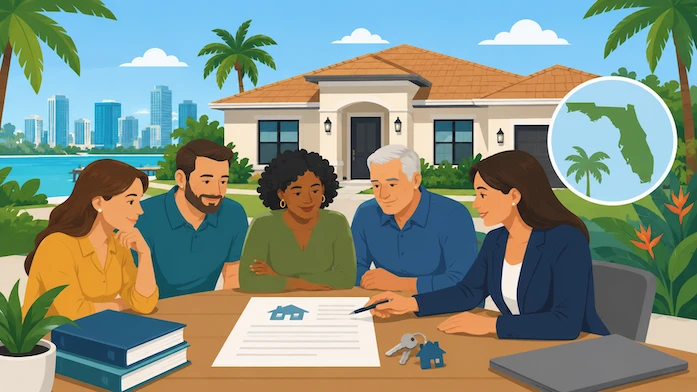
Selling a house is rarely simple. When multiple people share ownership of the same property, the process becomes even more complex. Disagreements about pricing, timing, repairs, and whether to sell at all can stall a transaction before it even starts.
If you co-own a home in Florida – whether with a sibling, business partner, ex-spouse, or investment partner – you are not alone. Co-owned properties are more common than most people realize, and understanding your legal rights and selling options can help you move forward without unnecessary conflict or delays.
This guide explains how selling a house with multiple owners works in Florida, what options are available when co-owners disagree, and how to find the simplest path to a successful sale.
What Does It Mean to Co-Own a Property?
Co-ownership means two or more people hold legal title to the same real estate. This can happen in several ways, and the way the property is titled affects what each owner can do.
Common Forms of Co-Ownership in Florida
- Joint Tenancy With Right of Survivorship – Both owners share equal interest. If one owner passes away, the surviving owner automatically inherits the full property.
- Tenancy in Common – Each owner holds a specific percentage of the property. Ownership shares can be unequal, and each owner can sell or transfer their portion independently.
- Tenancy by the Entirety – Available only to married couples in Florida. Both spouses share equal ownership, and neither can sell their interest without the other’s consent.
- Community Property – Applies to property acquired during a marriage. Both spouses typically have equal rights to the property.
Understanding how your property is titled is the first step. The ownership structure determines whether all owners must agree to sell, whether one owner can force a sale, and how proceeds will be divided.
Why Co-Owned Properties Can Be Hard to Sell
When one person owns a home, the selling decisions are straightforward. With multiple owners, every decision requires coordination, and that is where things often break down.
Disagreements About Selling
One owner may want to sell immediately while another wants to hold onto the property. One may need the cash now while the other sees long-term value. These differences can create real tension, especially when family members or close friends are involved.
Unequal Financial Contributions
If one owner paid more for the property, contributed to renovations, or covered years of mortgage payments, they may feel entitled to a larger share of the proceeds. Without clear agreements in place, these situations can become contentious.
Emotional Attachments
Some co-owned properties have deep sentimental value. A family home passed down through generations, a vacation property where children grew up, or a first investment property that started a portfolio – these connections can make purely financial decisions feel much harder.
Distance and Communication Gaps
When co-owners live in different cities or states, managing the sale becomes logistically more difficult. Scheduling showings, reviewing offers, and making joint decisions all require communication that can break down over distance.
Your Options When Co-Owners Want Different Things
If you and your co-owners are not aligned on selling, you still have options. Florida law provides several paths forward depending on your ownership structure and the level of disagreement.
Option 1: Negotiate a Buyout
One owner can buy out the other owner’s share of the property. This allows the buying owner to keep the property while the selling owner receives their portion of the agreed-upon value.
A buyout requires both parties to agree on a fair price. This may involve a professional appraisal, a review of recent comparable sales, or a direct cash offer from the buying owner.
Buyouts work well when one owner wants to keep the home and the other wants to move on. The key is reaching a price that both sides consider fair.
Option 2: Sell to an Outside Buyer Together
When all co-owners agree to sell, the property can be listed on the open market or sold directly to a buyer. Every owner must sign the sale documents for the transaction to close.
This is the most straightforward path when agreement exists. However, the timeline, pricing, and repair expectations must all be coordinated among every owner involved.
Option 3: Sell As-Is to a Cash Buyer
Selling as-is to a cash buyer can be especially practical for co-owned properties that need repairs, have limited agreement among owners, or must be sold quickly.
A cash buyer purchases the property in its current condition. No repairs, no cleaning, no staging, and no showings. Every owner receives their share of the proceeds based on the agreed ownership percentages.
This option works well when co-owners want to avoid the time, expense, and conflict that can come with traditional listings. If you want to understand how this process works from start to finish, learning about how cash home buyers determine their offers can give you a clearer picture of what to expect.
Option 4: Partition Action (Forcing a Sale)
When co-owners cannot agree, Florida law allows any owner to file a partition action. This is a legal process where the court orders the property to be sold and the proceeds divided according to ownership shares.
A partition action is typically a last resort. It can be expensive, time-consuming, and damaging to personal relationships. Legal fees, court costs, and the possibility of a court-ordered sale at below-market value make this an option most co-owners try to avoid.
Before pursuing partition, it is worth exploring whether negotiation, mediation, or a direct sale can resolve the situation more efficiently.
How Florida Partition Laws Work
Florida’s partition statutes allow any co-owner to file a petition with the court to divide or sell the property. The court will generally order a sale when the property cannot be physically divided fairly.
Types of Partition
- Partition in Kind – The property is physically divided among the owners. This is rare for residential properties because most homes cannot be meaningfully split.
- Partition by Sale – The property is sold, and the proceeds are distributed among the owners based on their ownership percentages. This is the most common outcome.
What Happens During a Partition Action
- A co-owner files a petition with the court.
- The court determines ownership shares and evaluates the property.
- The property is typically ordered to be sold, often through a court-supervised auction or negotiated sale.
- Proceeds are divided after legal fees, liens, and expenses are paid.
Partition actions can take months or even years to resolve. The costs add up quickly, and the final sale price may not reflect the property’s full market value.
This is why most co-owners benefit from exploring voluntary alternatives before resorting to legal action.
Steps to Selling a Co-Owned Property in Florida
Whether you are working together or navigating disagreements, following a structured process can help reduce confusion and keep things moving.
Step 1: Review the Ownership Structure
Start by understanding how the property is titled. Check the deed, any co-ownership agreements, and any existing contracts between owners. This will determine who has legal authority to act and what rights each owner holds.
Step 2: Communicate Openly With All Owners
Even when disagreements exist, open communication is essential. Discuss each owner’s goals, timeline, financial needs, and expectations. Sometimes a simple conversation reveals solutions that neither side had considered.
If direct conversations are difficult, a neutral mediator can help facilitate productive discussions.
Step 3: Determine the Property’s Value
Before deciding how to sell, understand what the property is worth. You can request a professional appraisal, review comparable sales in the area, or get a direct cash offer.
Understanding the home’s value helps every owner make informed decisions about pricing, repairs, and which selling option makes the most sense.
Step 4: Decide on Repairs
If the property needs work, decide whether repairs are worth the investment. When multiple owners are involved, repair decisions can become another source of disagreement.
Selling as-is eliminates the need for repair negotiations entirely. A buyer who purchases the home in its current condition removes that burden from every owner.
Step 5: Choose the Right Selling Method
Based on the property’s condition, the owners’ goals, and the level of agreement, choose the method that works best for everyone. Options include listing with a real estate agent, selling directly to a cash buyer, or negotiating a buyout.
Step 6: Handle the Legal and Financial Details
Work with a real estate attorney to ensure all documents are properly prepared, ownership shares are accurately reflected, and closing proceeds are distributed correctly.
Reviewing information about closing costs in South Florida before you reach the closing table can help every owner understand what to expect from the final proceeds.
Selling a Co-Owned Property As-Is
When co-owners want the simplest possible path forward, selling as-is to a cash buyer is often the best choice. There is no need to coordinate repairs, schedule showings, or negotiate with buyers who may back out after inspections.
Cash buyers evaluate the property based on its location, condition, and market potential. They make an offer, and if every owner agrees, the sale moves forward on a timeline that works for everyone.
This approach can be especially helpful when:
- Co-owners live in different states or cities
- The property needs significant repairs
- Owners disagree on pricing or repair investments
- The estate needs to settle quickly
- One or more owners want to avoid the stress of a traditional sale
For homeowners exploring this option, understanding how direct cash offers compare to traditional listings can help clarify the trade-offs between speed, price, and convenience.
Common Challenges With Co-Owned Properties
Unpaid Taxes or Liens
If the property has outstanding property taxes, HOA liens, or mortgage balances, these must be resolved before or during the sale. Co-owners should review any existing financial obligations early in the process.
Inherited Properties With Multiple Heirs
When a property is inherited by several family members, the ownership situation can become especially complicated. Heirs may have different financial needs, emotional connections to the property, and ideas about what to do with it.
In these cases, selling the property quickly and dividing the proceeds can help families avoid prolonged disputes. Reviewing probate property selling guidelines can help heirs understand their rights and obligations.
Properties in Different Counties
Co-owned properties may be located in Miami-Dade, Broward, Palm Beach, or another Florida county. Each county has different tax rules, transfer requirements, and market conditions that can affect the sale.
For example, understanding Miami-Dade transfer tax rules helps co-owners in that area prepare for the costs involved in closing.
Co-Owners Who Are Hard to Reach
When one owner is unresponsive, unreachable, or unwilling to participate, the sale can stall. In these situations, the remaining owners may need to explore legal options such as a partition action or seek court guidance.
How Long Does It Take to Sell a Co-Owned Property?
The timeline depends on the selling method and the level of agreement among owners.
- Direct cash sale – Can close in as little as one to two weeks once all owners agree.
- Traditional listing – May take several weeks or months, especially if repairs, showings, and buyer financing are involved.
- Partition action – Can take many months and sometimes over a year to resolve through the courts.
The fastest outcomes usually happen when co-owners align on goals and choose a straightforward selling method.
What Happens to the Proceeds?
When the property sells, the proceeds are typically divided based on each owner’s documented ownership percentage. Any outstanding liens, mortgages, taxes, or legal fees are usually paid first.
An attorney or title company can help ensure that the distribution is handled correctly and that all parties receive their fair share.
Tips for a Smooth Co-Owned Property Sale
- Get everything in writing. Agreements between co-owners should be documented clearly, even if they seem informal.
- Hire a neutral third party. An attorney, mediator, or real estate professional can help keep negotiations fair and productive.
- Be realistic about the property’s condition. Overpricing based on sentiment rather than market data can delay the sale.
- Consider everyone’s timeline. One owner may need cash immediately while another prefers to wait. Finding a middle ground benefits everyone.
- Avoid letting disagreements escalate. Small conflicts can become expensive legal battles if they are not addressed early.
Final Thoughts
Selling a house with multiple owners in Florida does not have to become a legal battle or a source of lasting conflict. Understanding your ownership rights, exploring all available options, and choosing a selling method that respects every owner’s needs can make the process much smoother.
Whether you decide to sell on the open market, negotiate a buyout, or accept a direct cash offer, the key is making informed decisions together. When co-owners communicate clearly and work toward a shared goal, even complicated situations can lead to successful outcomes.
If you are considering selling a co-owned property and want to understand your options, you can get a free property estimate to see what your home may be worth.
Frequently Asked Questions
Can one owner sell a co-owned property without the others?
It depends on the ownership structure. In most cases, all owners must agree to sell. However, a tenant in common may be able to sell their individual share without the other owners’ consent.
What happens if co-owners disagree about selling?
If co-owners cannot reach an agreement, one owner may file a partition action in court. This is typically a last resort because it can be expensive and time-consuming.
Do all owners have to sign the closing documents?
Yes, in most co-ownership situations, every owner must sign the sale documents for the transaction to close legally.
Can I sell my share of a co-owned property to someone else?
In a tenancy in common, you may be able to sell your individual share to another person. However, this can create complications for the remaining owners and may require legal guidance.
How are proceeds divided when a co-owned property sells?
Proceeds are typically divided based on each owner’s documented ownership percentage after any liens, taxes, and closing costs are paid.
Is selling as-is a good option for co-owned properties?
Selling as-is can be an excellent option when co-owners want to avoid repair negotiations, lengthy timelines, and the uncertainty of traditional listings. A cash buyer can often close faster and with less conflict.
Do I need a lawyer to sell a co-owned property in Florida?
While not legally required in every case, working with a real estate attorney is strongly recommended when multiple owners are involved. An attorney can help ensure proper documentation, fair distribution of proceeds, and compliance with Florida law.