
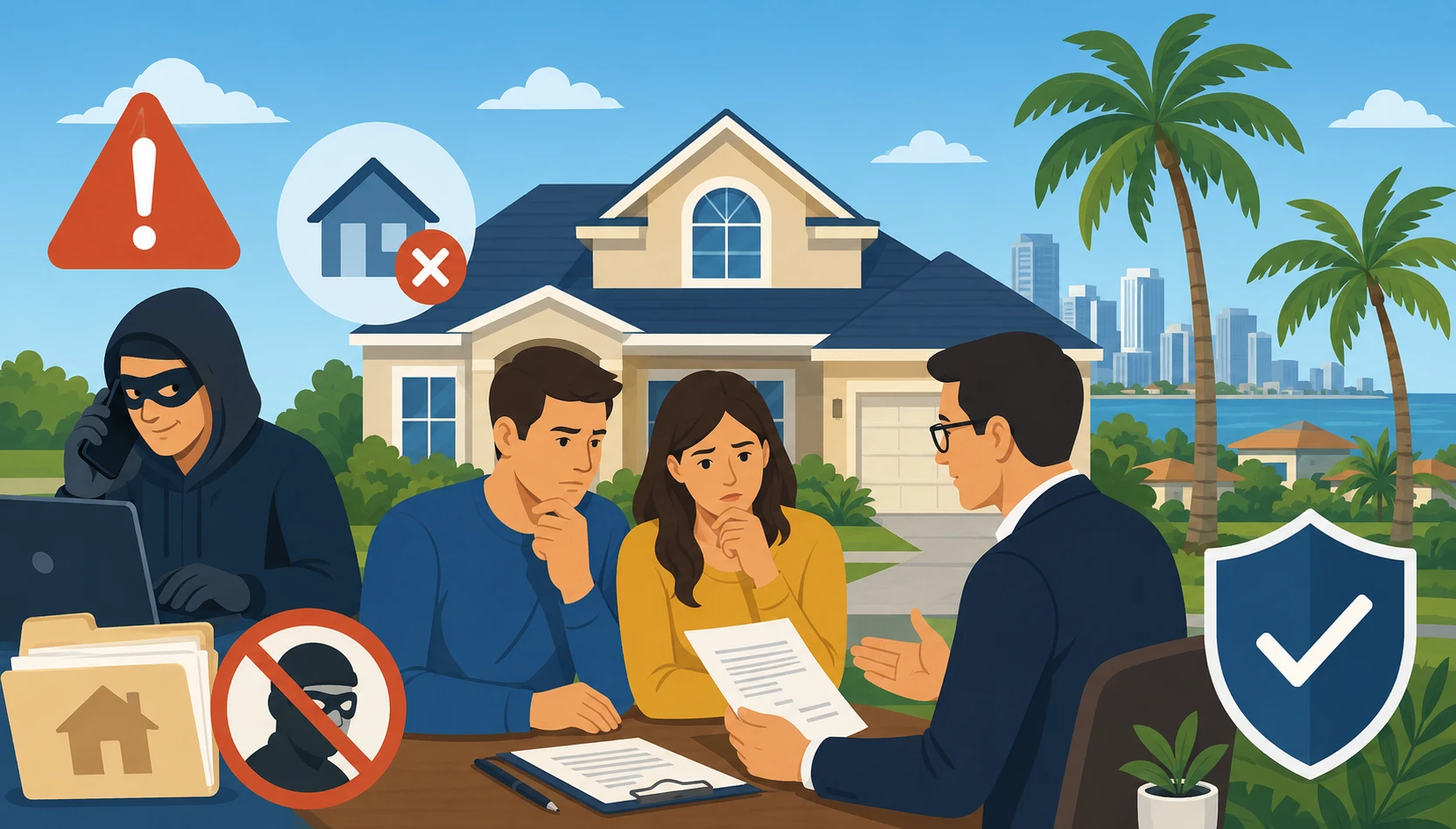
Florida’s real estate market continues to attract buyers, investors, flippers, and out-of-state movers looking for opportunities. While that creates strong demand for homes, it also creates opportunities for scammers targeting homeowners, buyers, and even renters across the state.
From fake cash buyers to wire fraud schemes, real estate scams in Florida have become more sophisticated over the years. Many scams are designed to pressure people into acting quickly before they notice warning signs.
Whether you are selling a home, buying property, or considering a cash offer, understanding how these scams work can help you avoid costly mistakes. In this guide, we’ll break down the most common real estate scams in Florida, how they typically happen, and what you can do to protect yourself.
Why Real Estate Scams Are Common in Florida
Florida remains one of the busiest real estate markets in the country. Cities across South Florida continue seeing high demand from retirees, investors, vacation buyers, and remote workers moving from other states.
That fast-moving environment makes it easier for scammers to blend in. Some scams involve fake listings, while others target homeowners dealing with stressful situations like foreclosure, inherited property issues, fire damage, or expensive repairs.
In many cases, scammers specifically target people who need to sell quickly because they assume urgency will reduce caution.
Homeowners already dealing with property problems may also become vulnerable to dishonest offers. This is especially true for owners managing difficult repairs, similar to situations like selling a fire-damaged home or properties affected by major environmental issues.
Fake Cash Buyer Scams
How This Scam Works
One of the most common Florida real estate scams involves fake cash buyers pretending to purchase homes quickly.
The scammer may present themselves as:
- A local investor
- A house-flipping company
- A private buyer
- A fake investment group
They often promise:
- Fast closings
- No inspections
- No realtor commissions
- Immediate cash offers
At first, the deal may seem legitimate. But problems usually appear later in the process.
Common Warning Signs
Scammers may:
- Refuse in-person meetings
- Avoid showing proof of funds
- Pressure you to sign immediately
- Ask for upfront fees
- Change terms at the last minute
- Disappear before closing
Some even use fake contracts to collect sensitive personal information.
Legitimate investors understand that homeowners need transparency during the selling process. If an offer feels rushed or vague, it deserves closer review.
Wire Fraud During Closings
One of the Most Expensive Real Estate Scams
Wire fraud has become a major issue in Florida real estate transactions.
In this scam, hackers gain access to emails between buyers, sellers, title companies, or agents. Near closing day, they send fake wiring instructions that appear legitimate.
The victim unknowingly transfers money directly into the scammer’s account.
Because wire transfers move quickly, recovering funds can become extremely difficult.
How to Protect Yourself
Always verify wire instructions by calling the title company directly using a trusted phone number.
Never rely solely on emailed instructions, especially if:
- The message arrives suddenly
- Payment details change unexpectedly
- The email wording feels unusual
- The sender pressures urgency
A simple phone call can prevent a massive financial loss.
Foreclosure Rescue Scams
False Promises to Save Your Home
Homeowners facing foreclosure are often targeted by scammers claiming they can stop the process.
These companies may advertise:
- “Guaranteed foreclosure help”
- “Government-backed assistance”
- “Instant loan modification approval”
Some ask homeowners to:
- Transfer property ownership temporarily
- Pay large upfront fees
- Sign complicated paperwork
- Stop communicating with lenders
In many cases, victims lose both money and their homes.
What Legitimate Assistance Looks Like
Real foreclosure assistance should involve:
- Licensed professionals
- Clear documentation
- Transparent communication
- No unrealistic guarantees
If someone promises immediate results without reviewing your situation carefully, that’s a major red flag.
Fake Rental Listing Scams
A Growing Problem Across Florida
Scammers frequently copy legitimate property listings and repost them at lower prices to attract renters.
The fake landlord then requests:
- Security deposits
- Application fees
- Wire transfers
- Payments before showings
Victims often discover the scam after arriving at a property that either does not exist or is occupied by someone else.
Red Flags to Watch For
Be cautious if:
- The rent seems unusually low
- The owner refuses in-person tours
- Communication only happens through messaging apps
- The listing uses stock images
- Payment is requested before paperwork
Scammers often create urgency by claiming multiple applicants are waiting.
Title Fraud and Deed Theft
When Scammers Steal Property Ownership
Title fraud is becoming increasingly common in Florida, especially involving vacant lots, inherited properties, and vacation homes.
In this scam, criminals forge documents to transfer ownership of a property into their own name. They may then:
- Sell the property
- Take out loans against it
- Rent it fraudulently
Owners sometimes do not discover the issue until much later.
How Homeowners Can Protect Themselves
You can reduce risk by:
- Monitoring county property records
- Using title monitoring services
- Reviewing mail from tax authorities
- Acting quickly if ownership records change unexpectedly
This type of fraud often targets absentee owners who rarely visit the property.
Contractor and Repair Scams After Storm Damage
Storm Recovery Creates Opportunities for Fraud
Florida homeowners frequently deal with hurricanes and severe weather damage. Unfortunately, scammers often appear immediately after storms.
These fake contractors may:
- Demand large upfront payments
- Use high-pressure tactics
- Offer unrealistic repair timelines
- Disappear after partial work
Some also submit fraudulent insurance claims.
Smart Ways to Avoid Contractor Scams
Before hiring anyone:
- Verify licenses and insurance
- Check online reviews
- Request written contracts
- Avoid paying everything upfront
- Confirm local references
Storm-related urgency should never eliminate proper due diligence.
Mold and Property Condition Misrepresentation
Hidden Problems Can Become Costly
Some sellers or fake investors attempt to hide serious property issues during transactions.
Mold, water damage, foundation issues, and illegal renovations are common concerns in South Florida homes.
Buyers who skip inspections may inherit expensive repairs later.
In many situations, homeowners wonder whether difficult properties can even be sold. Concerns around severe property damage often overlap with questions about whether cash buyers purchase homes with mold problems, especially in humid Florida climates.
Always Get Independent Inspections
Even if a property appears clean and updated, independent inspections remain essential.
Never rely solely on:
- Seller statements
- Investor claims
- Cosmetic renovations
- Verbal assurances
Professional inspections help uncover hidden issues before closing.
Fake Real Estate Agents and Unlicensed Activity
Not Every “Agent” Is Legitimate
Some scammers pretend to be licensed real estate professionals without proper credentials.
They may:
- Collect deposits
- Represent fake listings
- Offer fraudulent services
- Pressure buyers into fake deals
Florida law requires real estate agents to hold active licenses.
Verify Licensing Before Working Together
Before signing agreements:
- Check Florida licensing databases
- Review brokerage information
- Search online reviews
- Confirm office locations
Airbnb and Vacation Rental Scams
Vacation Markets Attract Scammers
South Florida’s vacation rental market creates opportunities for fake short-term rental listings.
Scammers may:
- Post fake vacation homes
- Collect deposits
- Cancel at the last minute
- Use copied photos from real listings
Investors entering the short-term rental market should also understand local legal requirements before purchasing properties.
Anyone considering rental investments should first understand rules and legal requirements to avoid expensive compliance problems.
How to Protect Yourself During Any Real Estate Transaction
Slow Down Major Decisions
Scammers depend on urgency.
If someone pressures you to:
- Sign immediately
- Skip inspections
- Wire funds quickly
- Avoid legal review
take a step back before moving forward.
Work With Trusted Professionals
Reliable real estate transactions usually involve:
- Licensed agents
- Reputable title companies
- Real estate attorneys
- Verified investors
A legitimate buyer or company will not discourage transparency.
Verify Everything Independently
Always confirm:
- Ownership records
- Licensing information
- Wire instructions
- Company reviews
- Proof of funds
Independent verification reduces the chance of fraud significantly.
Sell Your House Fast — With Supreme Royalty Investments
We help South Florida homeowners sell properties quickly while keeping the process transparent, straightforward, and professional.
Final Thoughts
Real estate scams in Florida continue evolving as the market stays active and competitive. While many transactions are legitimate, homeowners and buyers should always stay alert for warning signs.
The best protection comes from slowing down, verifying information carefully, and working with experienced professionals you trust.
Whether you are selling a distressed property, buying an investment home, or reviewing a cash offer, informed decisions can help you avoid expensive mistakes and unnecessary stress.
FAQ
What is the most common real estate scam in Florida?
Wire fraud and fake cash buyer scams are among the most common real estate scams in Florida today. Both often involve high-pressure tactics and fake documentation.
How can I verify if a cash buyer is legitimate?
Ask for proof of funds, review company information online, verify local presence, and avoid buyers who pressure immediate decisions without transparency.
Are fake rental listings common in South Florida?
Yes. Fake rental listings are increasingly common in Miami, Fort Lauderdale, and other high-demand areas where scammers repost legitimate listings to collect deposits.
Should I avoid wiring money during a real estate transaction?
Wire transfers are common during closings, but you should always verify instructions directly with the title company before sending funds.
Can scammers steal ownership of my house?
Yes. Title fraud and deed theft can happen, especially involving vacant homes or inherited properties. Monitoring property records regularly can help detect suspicious activity early.
Is using a realtor safer when selling a home?
Working with a licensed and experienced realtor can reduce risk, especially when verifying buyers, reviewing contracts, and handling negotiations professionally.