
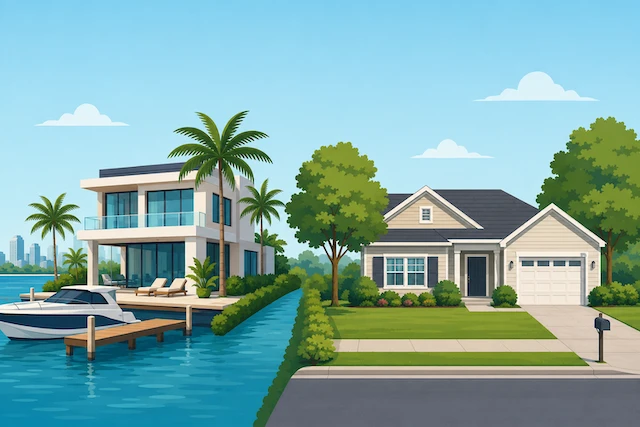
When buying or selling a home in South Florida, one of the biggest decisions you’ll face is choosing between a waterfront property and an inland home. Both offer unique advantages, but the right choice depends on your lifestyle, budget, long-term goals, and maintenance expectations.
Waterfront homes are known for stunning views, boating access, and premium property values, while inland homes often provide greater affordability, lower insurance costs, and easier maintenance. Whether you’re planning to move, invest, or sell your property, understanding the differences can help you make a more informed decision.
This guide breaks down the pros and cons of waterfront homes versus inland homes so you can determine which option best fits your needs.
What Is Considered a Waterfront Home?
A waterfront home is any residential property located directly on a body of water. In South Florida, this can include:
-
Oceanfront homes
-
Intracoastal properties
-
Canal homes
-
Lakefront houses
-
Riverfront residences
Many waterfront homes include private docks, seawalls, or direct boating access, making them especially attractive to boat owners and luxury buyers.
Inland homes, on the other hand, are located away from major waterways. They can still be close to beaches, shopping centers, parks, and schools without carrying the unique costs associated with waterfront ownership.
Advantages of Waterfront Homes
Beautiful Views Every Day
One of the biggest reasons buyers choose waterfront properties is the scenery.
Water views create a relaxing atmosphere that many homeowners enjoy year-round. Whether it’s watching the sunrise over the ocean or relaxing beside a canal after work, the visual appeal is difficult to match.
These views also contribute significantly to property value.
Strong Long-Term Appreciation
Waterfront real estate is typically limited in supply.
Because there are only so many homes directly on the water, demand often remains strong even during slower housing markets. This scarcity can help waterfront homes appreciate faster than comparable inland properties.
Luxury buyers and vacation home investors frequently seek waterfront properties, adding another layer of demand.
Great for Boating and Water Activities
Many waterfront homeowners enjoy immediate access to:
-
Boating
-
Fishing
-
Paddleboarding
-
Kayaking
-
Jet skiing
Having a private dock can save marina fees while making spontaneous trips on the water much more convenient.
Attractive Vacation Rental Potential
Waterfront homes often command higher nightly rental rates.
Travelers frequently prioritize water views, boat access, and luxury amenities when booking vacation rentals.
If you’re considering using your property as an investment, understanding local rental regulations is equally important. Reading about vacation rental tax differences can help you avoid surprises later.
Drawbacks of Waterfront Homes
Higher Purchase Prices
Premium locations naturally come with premium pricing.
Waterfront properties often cost significantly more than similar inland homes, making them less accessible for first-time buyers.
The higher purchase price also means:
-
Larger down payments
-
Bigger mortgages
-
Higher property taxes
Increased Insurance Costs
Insurance is often one of the biggest ongoing expenses.
Depending on the location, waterfront homes may require:
-
Flood insurance
-
Windstorm coverage
-
Higher homeowners insurance limits
These additional costs should always be factored into your monthly budget.
More Maintenance
Living near water accelerates wear and tear.
Salt air, humidity, and moisture can impact:
-
Exterior paint
-
Roofs
-
Windows
-
HVAC systems
-
Metal fixtures
If the property includes a seawall or dock, those structures also require regular inspections and maintenance.
Greater Storm Exposure
Homes located directly on the coast or waterways face increased hurricane risk.
Storm surges and flooding can result in expensive repairs, making preparedness essential.
Benefits of Inland Homes
Lower Purchase Prices
For buyers with tighter budgets, inland homes typically provide more square footage for the money.
Instead of paying a premium for water access, buyers can often afford:
-
Larger lots
-
Newer homes
-
Better school districts
-
More updated interiors
This makes inland neighborhoods especially attractive to families.
Lower Insurance Expenses
Because inland homes generally face less flood risk, insurance premiums are often considerably lower.
Reduced insurance costs can free up monthly cash flow for:
-
Home improvements
-
Investments
-
Savings
-
Travel
Over several years, these savings can become substantial.
Easier Maintenance
Without constant exposure to saltwater and coastal weather, inland homes usually experience less exterior deterioration.
Homeowners often spend less on:
-
Roof repairs
-
Exterior painting
-
Corrosion protection
-
Dock maintenance
-
Seawall repairs
More Neighborhood Choices
Most cities offer a much larger selection of inland communities.
This gives buyers more flexibility when prioritizing:
-
School districts
-
Commute times
-
Shopping
-
Parks
-
Healthcare access
Downsides of Inland Homes
No Water Access
For boating enthusiasts or those who enjoy waterfront living, inland properties simply can’t offer the same lifestyle.
Travel time to beaches, marinas, or waterways may become part of your routine.
Slower Appreciation in Some Areas
Although many inland neighborhoods appreciate steadily, they don’t always experience the same demand as premium waterfront locations.
Location still matters significantly.
Well-located inland homes near downtown areas or growing neighborhoods can still perform exceptionally well.
Less Vacation Rental Appeal
Vacation renters often search specifically for water views or beach access.
While inland homes can still generate rental income, they may require more competitive pricing to attract guests.
Understanding seasonal buyer demand is also helpful if your long-term plan involves selling. Learning about the best home-selling months can help maximize your property’s value when the time comes.
Comparing Waterfront and Inland Homes
Cost
Waterfront homes generally have:
-
Higher purchase prices
-
Higher taxes
-
Higher insurance premiums
-
Higher maintenance expenses
Inland homes typically offer a more affordable overall cost of ownership.
Lifestyle
Choose waterfront if you prioritize:
-
Boating
-
Scenic views
-
Outdoor recreation
-
Luxury living
Choose inland if you value:
-
Convenience
-
Affordability
-
Larger homes
-
Lower upkeep
Investment Potential
Waterfront properties often enjoy stronger appreciation due to limited inventory.
However, inland homes may deliver better cash flow because operating costs are lower.
The right investment depends on your financial goals.
Which Home Is Easier to Sell?
Both can sell quickly under the right market conditions.
Waterfront homes often attract fewer but more qualified buyers.
Inland homes appeal to a broader audience, including:
-
First-time buyers
-
Families
-
Retirees
-
Investors
Pricing remains the biggest factor regardless of location.
If you’re evaluating your selling costs, researching typical home selling expensesbeforehand can help you better estimate your net proceeds.
Should You Buy a Waterfront Home?
A waterfront property may be ideal if you:
-
Love boating or fishing
-
Plan to stay long-term
-
Appreciate luxury living
-
Can comfortably afford ongoing maintenance
It can also serve as a valuable investment if purchased in a high-demand location.
Should You Choose an Inland Home?
An inland property may be the better choice if you:
-
Want more home for your money
-
Prefer lower insurance costs
-
Want easier maintenance
-
Need access to schools and everyday conveniences
Many buyers discover that inland homes offer an excellent balance between affordability and lifestyle.
Selling Either Type of Home
Whether you’re selling a waterfront estate or an inland family home, every property has unique considerations.
Some sellers need to move quickly due to relocation, inheritance, financial changes, or investment decisions. Others may own homes needing repairs or updates before listing.
If your home requires extensive renovations, understanding renovation expenses before listing can help you decide whether repairs are worthwhile.
Homeowners facing financial challenges may also wonder whether selling with negative equity is possible before making their next move.
For owners of second homes or investment properties, exploring ways to convert vacation properties into cash can provide additional flexibility when market conditions change.
If you’re looking for a simple alternative to the traditional selling process, you can also request a free home estimate to better understand your options before making a decision.
Final Thoughts
There’s no universal winner in the waterfront versus inland debate.
Waterfront homes deliver unmatched scenery, recreational opportunities, and long-term prestige, but they also come with higher ownership costs and maintenance responsibilities.
Inland homes provide affordability, convenience, and lower ongoing expenses, making them an excellent choice for many families and investors.
Ultimately, the best home is the one that aligns with your budget, lifestyle, and future plans. Carefully weighing both the financial and personal factors will help you make a confident decision whether you’re buying your dream home or preparing to sell your current one.
Frequently Asked Questions
Are waterfront homes worth the extra cost?
For buyers who value water access, scenic views, and long-term appreciation, waterfront homes can be an excellent investment. However, higher insurance and maintenance costs should be considered.
Do waterfront homes appreciate faster?
In many desirable markets, yes. Limited inventory and consistent buyer demand often contribute to stronger appreciation compared to inland homes.
Are inland homes easier to maintain?
Generally, yes. Inland properties experience less exposure to salt air, flooding, and coastal weather, reducing long-term maintenance costs.
Which is better for vacation rentals?
Waterfront homes usually generate higher nightly rates and stronger occupancy because travelers often prioritize water views and recreational access.
Is homeowners insurance more expensive for waterfront homes?
Typically, yes. Waterfront properties often require additional flood and windstorm insurance, increasing annual ownership costs.
Which type of home sells faster?
It depends on pricing, condition, and market demand. Inland homes typically appeal to a larger pool of buyers, while waterfront homes attract buyers seeking premium locations.