
Selling a home in South Florida can be exciting, especially when property values are strong and buyer demand remains active. However, one of the most important financial factors sellers often overlook is the amount they’ll pay in closing expenses before walking away with their final proceeds.
If you’re preparing to sell your property, understanding seller closing expenses can help you avoid surprises and make better financial decisions. Whether you’re listing traditionally or looking to sell your house fast, knowing what costs to expect allows you to plan ahead and maximize your net profit.
In this guide, we’ll break down what sellers typically pay at closing, the factors that affect those costs, and practical strategies to keep more money in your pocket when selling a home in South Florida.
What Are Seller Closing Costs?
Seller closing costs are the fees and expenses homeowners pay when transferring ownership of a property to a buyer. These costs are deducted from the seller’s proceeds at the closing table.
While many people focus on the sale price, closing expenses can significantly affect the amount you actually receive after the transaction is complete.
In South Florida, seller costs often include:
- Real estate agent commissions
- Title-related fees
- Documentary stamp taxes
- Property tax adjustments
- HOA fees and transfer charges
- Outstanding liens or judgments
- Attorney fees (if applicable)
- Repair credits negotiated with buyers
The exact amount varies depending on the property, location, and terms of the sale.
How Much Do Sellers Typically Pay in South Florida?
One of the most common questions homeowners ask is: how much should I expect to pay when selling?
The answer depends on several factors, but in most cases, sellers in South Florida can expect closing expenses to range from approximately 6% to 10% of the home’s sale price.
For example: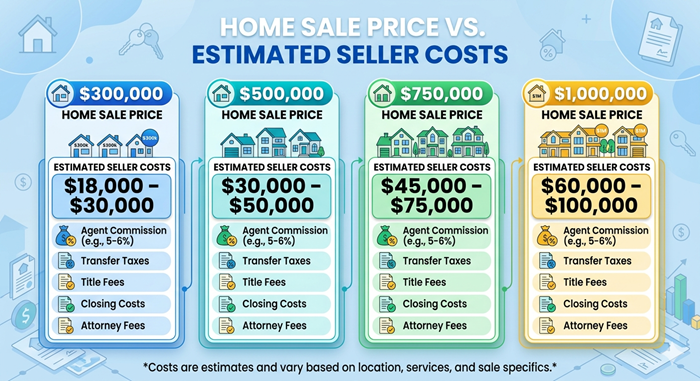
When homeowners search for the average closing costs for seller, they’re often surprised to learn that real estate commissions represent the largest portion of the total expense.
Major Closing Expenses Sellers Pay
Real Estate Agent Commissions
Traditionally, commissions are the biggest cost sellers face.
The commission is typically split between the listing agent and the buyer’s agent. While commission structures can vary, this expense often represents the largest percentage of the seller’s total closing costs.
Because commissions have such a significant impact on proceeds, many homeowners compare multiple selling options before listing.
Documentary Stamp Tax
Florida requires sellers to pay a documentary stamp tax on the deed when ownership transfers.
The amount is calculated based on the property’s sale price and varies slightly depending on the county.
This tax is mandatory and should always be factored into your selling budget.
Title Insurance
In many South Florida counties, sellers traditionally pay for the owner’s title insurance policy.
Title insurance protects the buyer from potential ownership disputes, liens, or title defects that could arise after the sale.
Although negotiable, local customs often influence who pays this expense.
Property Tax Adjustments
Property taxes are typically prorated between the buyer and seller based on the closing date.
If taxes have not yet been paid for the current year, the seller may owe their share at closing.
HOA and Condominium Fees
For homes located in planned communities or condominium associations, additional charges may apply.
Common fees include:
- Estoppel certificates
- HOA transfer fees
- Condominium document preparation fees
- Outstanding association balances
These costs can vary significantly between communities.
Factors That Affect Seller Closing Costs
Not every transaction is the same. Several variables can increase or decrease your expenses.
Property Location
Different counties may have varying tax rates, recording fees, and customary practices.
South Florida markets such as Miami-Dade, Broward, and Palm Beach may each have slightly different closing expectations.
Home Sale Price
Since many fees are calculated as a percentage of the sales price, higher-value homes generally result in higher closing expenses.
Negotiated Buyer Concessions
In competitive markets, sellers may agree to contribute toward buyer expenses to help finalize a deal.
These concessions can increase total seller costs but may help attract more buyers.
Property Condition
Homes requiring repairs often lead to negotiations after inspections.
Rather than making repairs, some sellers choose to offer credits, which effectively increase closing expenses.
How to Estimate Your Costs Before Listing
Many homeowners try to estimate closing costs florida before putting their property on the market.
The best approach is to work backward from your expected sales price and subtract anticipated expenses such as commissions, taxes, title fees, and prorated charges.
A preliminary net sheet prepared by a real estate professional or title company can provide a realistic picture of your expected proceeds.
Having this information early helps sellers make informed decisions regarding pricing and negotiation strategies.
Understanding Florida-Specific Seller Expenses
Florida has unique real estate transaction costs that differ from many other states.
For example, documentary stamp taxes on deeds are commonly paid by sellers, while title insurance customs vary by county.
Understanding these regional practices helps sellers avoid confusion and prepare financially for closing day.
If you’re considering relocating after the sale, it’s also helpful to understand the real cost of living in Fort Lauderdale, as housing-related expenses can influence your next move and budgeting decisions.
Ways to Reduce Seller Closing Costs
While some expenses are unavoidable, there are several ways to minimize your overall costs.
Compare Selling Methods
Traditional listings are not the only option available.
Some homeowners explore direct-sale solutions, investor purchases, or cash offers to reduce commissions and streamline the process.
Negotiate Fees
Certain costs may be negotiable depending on market conditions and buyer demand.
Items such as repairs, concessions, and even some title-related fees can occasionally be adjusted during negotiations.
Resolve Issues Before Listing
Addressing title problems, liens, or HOA violations before listing can prevent unexpected expenses later.
A smooth transaction often results in fewer delays and fewer financial surprises.
Price Strategically
An accurately priced home can attract stronger offers and reduce the likelihood of costly negotiations.
Proper pricing also helps sellers avoid extended market time, which can create additional carrying costs.
When Is It the Right Time to Sell?
Many homeowners wonder whether they should sell now or wait.
Market conditions, personal circumstances, and financial goals all play important roles in determining timing.
Reviewing these 5 signs it’s time to sell your South Florida home can help clarify whether moving forward with a sale aligns with your current situation.
If your property has appreciated significantly, selling sooner rather than later may allow you to capture equity while market conditions remain favorable.
Waterfront Properties Often Have Additional Considerations
South Florida’s waterfront market remains one of the most desirable in the country.
However, sellers of waterfront homes often encounter unique expenses related to inspections, insurance considerations, dock permits, and specialized buyer expectations.
Homeowners considering this market segment should understand the real cost of buying a waterfront home in South Florida, as these factors can influence both buyers and sellers during negotiations.
How Sellers Can Calculate Net Proceeds
To accurately calculate closing costs for seller, start with the anticipated sale price and subtract:
- Real estate commissions
- Documentary stamp taxes
- Title-related charges
- HOA fees
- Property tax prorations
- Repair credits
- Any outstanding mortgage balance
The result represents your estimated net proceeds after closing.
Having a clear understanding of this figure can help you plan for your next purchase, relocation, investment, or financial goal.
Final Thoughts
Understanding closing costs florida sellers face is essential when preparing to sell a property in South Florida.
While total expenses typically range between 6% and 10% of the sale price, the exact amount depends on factors such as commissions, taxes, title fees, property type, and negotiated concessions.
The more informed you are before listing, the better positioned you’ll be to make smart decisions, negotiate effectively, and maximize your proceeds. By planning ahead and understanding the costs involved, you can move through the selling process with confidence and fewer surprises at the closing table.
Frequently Asked Questions
1. What percentage do sellers usually pay in closing costs in South Florida?
Most sellers pay between 6% and 10% of the home’s sale price.
2. Who pays title insurance in South Florida?
In many counties, the seller traditionally pays for the owner’s title insurance policy.
3. Are closing costs negotiable?
Some fees and concessions may be negotiable depending on market conditions.
4. Do sellers pay property taxes at closing?
Sellers typically pay their prorated share of property taxes through the closing date.
5. Can I reduce my seller closing costs?
Yes, comparing selling options and negotiating certain fees can help lower overall expenses.