
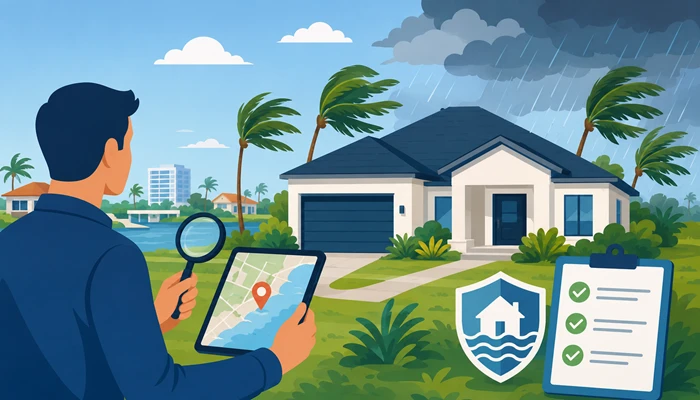
Buying a home in South Florida is an exciting decision, but it also requires careful research. Before making an offer, buyers should understand how the property’s location may affect its exposure to flooding, hurricanes, storm surge, and other weather-related risks. Knowing how to check a property’s flood zone and hurricane risk can help you make a more informed purchase and avoid unexpected insurance costs or repair challenges later.
Whether you are buying a waterfront condo, a suburban home, or an investment property, checking local risk information should be part of your due diligence. A few online tools, property records, and professional inspections can reveal important details about a home’s location and potential vulnerabilities.
Why Flood and Hurricane Risk Matters in South Florida
South Florida offers beautiful beaches, warm weather, and strong demand for real estate. However, its coastal location also makes some areas more vulnerable to heavy rainfall, storm surge, rising water levels, and tropical storms.
Flooding and hurricane exposure can affect more than just the safety of a property. These risks may influence:
- Homeowners insurance premiums
- Flood insurance requirements
- Property maintenance costs
- Resale value
- Financing and lender requirements
- The potential for storm-related damage
A property’s location is one of the most important factors to consider. Two homes located only a few miles apart can have very different levels of exposure depending on elevation, drainage, proximity to the coast, and local infrastructure.
Start by Checking the Property’s Official Flood Zone
The first step is to find the property’s official flood zone classification. Federal flood maps are commonly used to identify areas with different levels of flood risk.
When researching a home, search for the exact property address rather than relying only on the neighborhood name. A single community may include properties with different designations based on elevation and location.
The flood zones in Florida can affect insurance requirements and should be reviewed carefully before purchasing a property.
Understand What the Flood Zone Designation Means
Flood zone categories can provide useful information about the likelihood of flooding, but they do not guarantee that a property will or will not flood.
Some areas are considered higher risk because of their proximity to coastal waters, rivers, canals, or other sources of flooding. Other areas may have a lower mapped risk but can still experience flooding during extreme rainfall or major storms.
It is important to remember that flood maps are based on available data and can be updated over time. Buyers should consider the property’s history, drainage, elevation, and surrounding conditions in addition to the official classification.
Check the Florida Flood Zone Map for the Exact Address
A common mistake is checking only a general map of the city or county. Instead, use an official mapping tool that allows you to search for the property’s specific address.
When reviewing the map, look for:
- The property’s exact location
- The designated flood zone
- Nearby canals, lakes, rivers, or coastal areas
- Surrounding streets and drainage patterns
- Whether the property is near a mapped high-risk area
A property that appears close to a flood boundary deserves additional attention. Even when a home is outside a higher-risk designation, nearby water sources and local drainage conditions may still affect its exposure.
For buyers researching coastal communities, a south Florida flood zone map can be a useful starting point for comparing different neighborhoods and property locations.
Review the Property’s Elevation and Drainage
Flood risk is not determined by location alone. Elevation can make a major difference, especially in areas that experience heavy rainfall or storm surge.
Ask whether the property has an elevation certificate or other documentation that provides information about the structure’s height in relation to the expected flood level. This information may also be useful when discussing insurance costs.
Drainage is another important consideration. During heavy rain, water can collect in low-lying areas, streets, yards, and driveways. Look for signs such as:
- Water stains on exterior walls
- Erosion around the property
- Standing water in the yard
- Damaged landscaping
- Mold or moisture problems
- Water marks in garages or lower-level areas
A professional inspection can help identify conditions that may not be obvious during a short property visit.
Research the Home’s Hurricane Exposure
Flood risk is only one part of the equation. South Florida homeowners should also consider how a property may perform during a hurricane.
A hurricane can create several types of risk, including high winds, heavy rain, storm surge, flying debris, and extended power outages. The level of exposure depends on the property’s location, construction, age, and building features.
Check the Property’s Construction and Protection
When reviewing a home, pay attention to features that may improve storm resilience, including:
- Impact-resistant windows and doors
- Hurricane shutters
- A reinforced garage door
- A newer or properly maintained roof
- Roof straps and other structural connections
- Properly secured outdoor equipment
- Backup power options
For condominiums and other multi-unit buildings, ask about the age and condition of the roof, windows, common areas, and backup systems.
Older properties may still be excellent investments, but buyers should understand which improvements may be needed to improve protection against severe weather.
Review Previous Storm Damage and Insurance Claims
A property’s history can reveal important information that may not be obvious from a standard listing.
Ask the seller or real estate professional about previous storm damage, water intrusion, roof repairs, flooding, and insurance claims. You may also want to review available permits and repair records.
If a home has experienced significant damage, understand what was repaired and whether the work was completed by licensed professionals. A recent renovation does not automatically mean that all underlying problems have been resolved.
Buyers who are considering a damaged property should carefully weigh filing an insurance claim or selling your damaged South Florida home as-is before making a decision about the property.
Compare Coastal and Inland Property Risks
Not every South Florida property faces the same type of weather exposure. Coastal properties may have greater exposure to storm surge and saltwater damage, while inland properties can still experience heavy rainfall, drainage issues, and strong winds.
The best choice depends on your budget, lifestyle, insurance costs, maintenance expectations, and tolerance for weather-related risk. Buyers should compare waterfront homes vs. inland homes before deciding which type of location fits their long-term goals.
Location also affects market performance. Understanding the South Florida housing market forecast can help buyers evaluate how broader market conditions may influence future demand and resale potential.
Estimate Insurance Costs Before Making an Offer
Insurance should be part of your budget from the beginning, not something you investigate after signing a contract.
Ask for insurance quotes before committing to a property. Costs may vary significantly depending on:
- Flood zone classification
- Distance from the coast
- Roof age and condition
- Construction type
- Wind mitigation features
- Property value
- Previous claims
- Coverage limits and deductibles
A lower purchase price does not always mean a lower overall cost of ownership. Higher insurance premiums, flood coverage, maintenance, and storm-related upgrades can significantly affect your annual expenses.
Use Professional Due Diligence Before Closing
Online maps are useful, but they should not be your only source of information. A qualified home inspector can identify signs of water intrusion, structural concerns, roof problems, drainage issues, and other potential risks.
Depending on the property, you may also benefit from consulting:
- A licensed insurance professional
- A structural engineer
- A flood-risk specialist
- A qualified roofing contractor
- A local real estate professional
The goal is not necessarily to find a property with zero risk. In South Florida, that may not be realistic. Instead, the goal is to understand the risks clearly and determine whether the property fits your budget and expectations.
Final Thoughts
Checking flood and hurricane risk before buying a South Florida property is an essential part of smart real estate research. Start with the property’s official flood zone, then look at elevation, drainage, construction quality, storm protection, past damage, and insurance costs.
The most informed buyers do not rely on a single map or a seller’s description. They combine official records, professional inspections, insurance estimates, and local market knowledge before making a decision.
With careful research, you can better understand a property’s potential challenges and make a purchase that aligns with your financial goals and long-term plans. If you eventually decide that selling a property is the better option, you can also explore how to sell your house fast based on your specific situation.
Frequently Asked Questions
How do I check a property’s flood zone in South Florida?
Search the exact property address using an official flood mapping tool and verify the designation with local records.
Does being outside a high-risk flood zone mean a home cannot flood?
No, properties outside high-risk areas can still experience flooding from heavy rainfall, drainage problems, or severe storms.
Should I check hurricane risk before buying a home?
Yes, review the property’s construction, roof condition, storm protection features, location, and history of previous damage.
Can flood risk affect homeowners insurance costs?
Yes, flood exposure and other property characteristics can influence insurance requirements and premiums.
Should I hire a home inspector before buying?
Yes, a qualified inspector can identify water intrusion, roof issues, structural concerns, and other potential problems.