
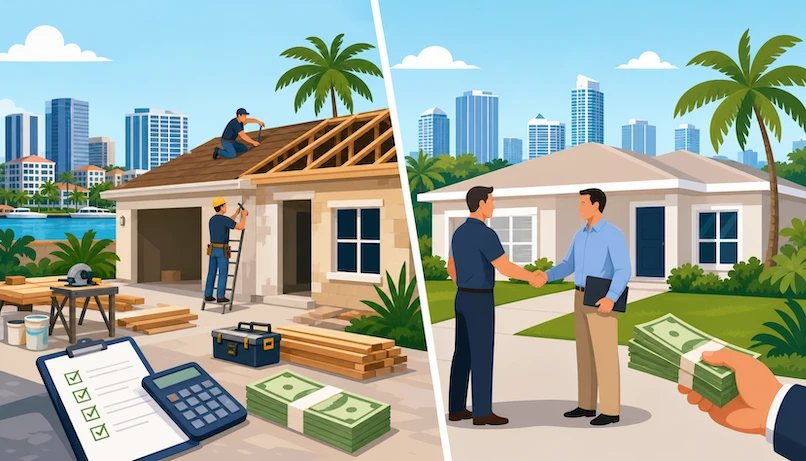
South Florida’s real estate market has long been a hotspot for investors, homeowners, and anyone looking to maximize property value. With rising demand, shifting market conditions, and increasing competition, one question keeps coming up: is it more profitable to flip a home or sell it as-is?
If you’re weighing your options, you’re not alone. The decision between flipping and selling comes down to time, budget, risk tolerance, and your overall financial goals. In this guide, we’ll break down both strategies in a clear, practical way so you can decide what makes the most sense for your situation.
Understanding the South Florida Real Estate Market
Before diving into flipping versus selling, it’s important to understand the local dynamics. South Florida is known for:
- High demand from out-of-state buyers
- A steady influx of investors
- Competitive pricing in desirable neighborhoods
- Seasonal fluctuations tied to tourism and migration trends
These factors can significantly impact how profitable either strategy becomes. In a hot seller’s market, even homes in less-than-perfect condition can sell quickly. On the flip side, rising construction costs and labor shortages can affect flipping margins.
What Does It Mean to Flip a Property?
Flipping involves buying a property—often below market value—renovating it, and reselling it for a profit. It sounds straightforward, but the execution is where things get complex.
The Appeal of House Flipping
Flipping can be highly profitable when done right. Investors are drawn to it because:
- You can significantly increase property value through upgrades
- There’s potential for large lump-sum profits
- You maintain control over pricing and presentation
A well-executed flip in South Florida can yield strong returns, especially in high-demand areas like Miami, Fort Lauderdale, or West Palm Beach.
The Hidden Challenges of Flipping
However, flipping isn’t without risk. Common challenges include:
- Unexpected repair costs
- Permit delays and contractor issues
- Market shifts during renovation
- Holding costs like taxes, insurance, and utilities
If you underestimate any of these, your profits can quickly shrink—or disappear entirely.
What Does It Mean to Sell a Property As-Is?
Selling as-is means listing your property in its current condition without making major repairs or renovations. This approach is often faster and less stressful.
Why Many Homeowners Choose to Sell
Selling as-is is appealing for several reasons:
- No upfront renovation costs
- Faster closing timelines
- Less effort and fewer decisions
- Reduced financial risk
For homeowners dealing with time constraints, inherited properties, or financial pressure, this option can be a practical solution.
If you’re navigating complex ownership situations, resources like this guide on selling probate property can help clarify your options and streamline the process.
Comparing Profit Potential: Flipping vs Selling
The big question is profitability. Let’s break it down.
Upfront Investment
Flipping requires significant capital. You’ll need funds for:
- Purchase price
- Renovations
- Labor and materials
- Permits and inspections
Selling, on the other hand, requires minimal investment—especially if you skip repairs.
Time Commitment
Flipping is time-intensive. Projects can take months, and delays are common.
Selling as-is can often be completed in a matter of weeks, making it ideal for those who need quick results.
Risk Factor
Flipping carries higher risk due to market fluctuations and renovation uncertainties.
Selling as-is offers more predictable outcomes, especially when working with experienced buyers.
Profit Margins
Flipping typically offers higher potential profit—but only if everything goes according to plan.
Selling provides a smaller but more reliable return, often with fewer complications.
When Flipping Makes Sense
Flipping can be the better choice if:
- You have experience with renovations or access to trusted contractors
- The property is in a desirable area with strong resale demand
- Repair costs are manageable and predictable
- You have the financial cushion to handle delays
In these situations, the added effort can translate into substantial profits.
When Selling Is the Smarter Move
Selling as-is is often the better option if:
- The property needs major repairs
- You want to avoid upfront costs
- You need to sell quickly
- You’re dealing with legal or financial complications
For example, if your property has legal encumbrances, like selling homes with liens, understanding the basics can help you move forward without unnecessary stress.
Cost Breakdown: A Realistic Look
Let’s look at a simplified comparison.
Flipping Costs
- Purchase price: $250,000
- Renovation costs: $50,000
- Holding costs: $15,000
- Total investment: $315,000
If the home sells for $375,000, your profit is $60,000—before taxes and fees.
Selling As-Is
- Sale price: $280,000
- Minimal costs
Profit is lower, but the process is faster and far less risky.
Market Conditions Matter More Than You Think
In a strong seller’s market, selling as-is can be surprisingly profitable. Buyers are more willing to take on fixer-uppers when inventory is low.
In a buyer’s market, flipping may give you a competitive edge by offering a move-in-ready home.
Timing your decision based on market trends can significantly impact your outcome.
Emotional and Practical Considerations
Beyond numbers, your personal situation matters.
Ask yourself:
- Do you have the time and energy for a renovation project?
- Are you comfortable managing contractors and budgets?
- Do you need cash quickly?
If the answer leans toward simplicity and speed, selling may be the better path.
How to Maximize Profit Regardless of Strategy
Whether you flip or sell, there are ways to improve your outcome:
Price Strategically
Overpricing can delay your sale, while underpricing leaves money on the table.
Understand Your Local Market
Neighborhood trends, buyer preferences, and comparable sales all play a role.
Work With the Right Professionals
From contractors to buyers, the people you work with can make or break your experience.
Making the Final Decision
There’s no one-size-fits-all answer. The right choice depends on your:
- Financial situation
- Timeline
- Risk tolerance
- Property condition
If you’re still unsure, the best next step is to get a clear understanding of your property’s current value. You can start by requesting a quick home estimate to explore your options with confidence.
Frequently Asked Questions
Is flipping houses still profitable in South Florida?
Yes, but margins are tighter than they used to be due to rising costs. Success depends on accurate budgeting and market timing.
How long does it take to flip a house?
Most flips take 3 to 6 months, but delays can extend timelines significantly.
Can I sell a house without making repairs?
Absolutely. Many buyers are specifically looking for as-is properties, especially in competitive markets.
Which option is less risky?
Selling as-is is generally less risky because it avoids renovation uncertainties and market timing issues.
Do I need a large budget to flip a house?
Yes. Flipping requires substantial upfront capital, plus a financial cushion for unexpected expenses.
Final Thoughts
Flipping and selling both offer viable paths to profit in South Florida—but they cater to different goals and circumstances.
If you’re looking for maximum returns and are willing to take on risk, flipping can be rewarding. If you prefer speed, simplicity, and predictability, selling as-is may be the smarter choice.
The key is aligning your strategy with your resources and timeline. When you approach the decision with clarity, you’ll be in a much better position to maximize your property’s value.