
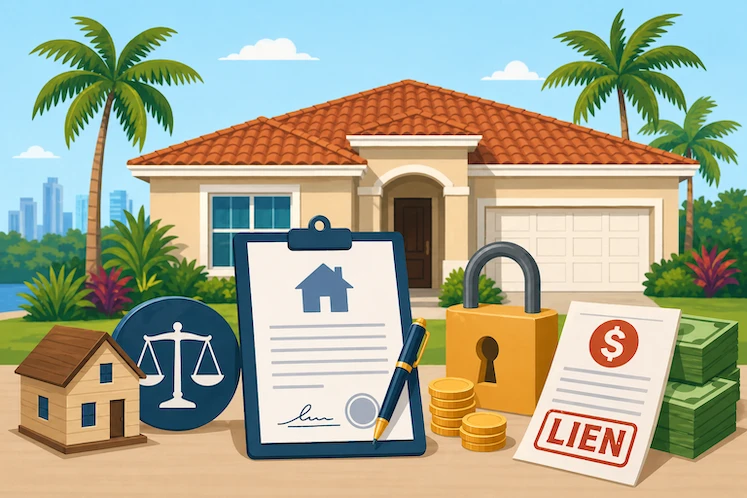
Selling a house with liens in Florida can feel stressful, but it is more common than many homeowners realize. A lien does not always mean you are stuck with the property forever. In many cases, liens can be paid, negotiated, or resolved during the closing process.
The key is knowing what type of lien is attached to the property, how much is owed, and whether the sale price can cover the debt. Florida judgment liens on real property generally become liens when properly recorded in county records, and construction lien rights are governed under Florida’s Construction Lien Law.
If you own a home in Miami, Fort Lauderdale, West Palm Beach, Tampa, Orlando, Jacksonville, or anywhere else in Florida, this guide will walk you through what liens mean, how they affect a sale, and what options you may have.
What Is a Property Lien?
A property lien is a legal claim against real estate because of an unpaid debt. It gives a creditor an interest in the property until the debt is paid or otherwise resolved.
A lien does not always remove your ownership, but it can make selling harder because most buyers want clear title. Clear title means there are no unresolved claims that could affect ownership after closing.
That is why liens usually need to be handled before or during the sale.
Can You Sell a House With Liens in Florida?
Yes, you can sell a house with liens in Florida. However, the lien usually must be satisfied before the buyer can receive clear title.
In many cases, the lien is paid from the seller’s proceeds at closing. The title company or closing agent identifies the lien, confirms the payoff amount, and pays the creditor before the remaining funds are distributed.
This is common with mortgages, tax liens, HOA liens, judgment liens, and contractor liens. The sale can still happen, but the lien cannot simply be ignored.
If you are dealing with an inherited home, it may also help to review how probate property sales work because estate issues and liens often overlap.
Common Types of Liens on Florida Homes
Not all liens are the same. Some are easier to resolve than others, and some may require legal guidance before closing.
Mortgage Liens
A mortgage is one of the most common liens. When you sell the home, the mortgage balance is usually paid off from the sale proceeds.
If the home sells for more than what is owed, the seller keeps the remaining equity after closing costs and other debts.
Property Tax Liens
Unpaid property taxes can create a serious issue. Tax liens are often high priority and must be handled before the sale can close.
Buyers and title companies will usually require these amounts to be paid so the buyer does not inherit the debt.
HOA or Condo Association Liens
If you owe homeowners association or condo association dues, the association may place a lien on the property.
This is especially common in Florida communities with gated neighborhoods, townhomes, condos, and planned developments.
Judgment Liens
A judgment lien may come from a lawsuit, unpaid debt, or court judgment. Under Florida law, a judgment can become a lien on real property in a county when a certified copy is properly recorded in that county’s official records or judgment lien record.
These liens can complicate closing because the title company must confirm whether the judgment applies and what amount must be paid.
Construction or Contractor Liens
If a contractor, subcontractor, laborer, or supplier was not paid for work on the property, they may have lien rights under Florida’s Construction Lien Law.
This can happen after roof work, remodeling, repairs, additions, or other property improvements.
IRS or Federal Tax Liens
Federal tax liens can also attach to real estate. These can be more complicated and may require communication with the IRS before a sale can close.
How Liens Affect the Home Selling Process
A lien can affect your home sale in several ways. The biggest issue is title.
Most buyers, lenders, and title companies want the lien resolved before ownership transfers. If the lien remains, the buyer could face future legal or financial problems.
That is why liens are typically discovered during the title search. Once found, the lien must be reviewed, paid, released, disputed, or negotiated.
Can Liens Be Paid at Closing?
Yes, many liens can be paid at closing. This is often the simplest path when the property has enough equity.
For example, if your home sells for $350,000 and you owe $20,000 in liens, the closing agent may use the sale proceeds to pay those liens. After other costs are paid, you receive the remaining balance.
This approach works best when the lien amount is clear and the sale price is high enough to cover the debt.
Before closing, it is smart to gather documents sellers need so you are not scrambling when the title company requests payoff information.
What If the Lien Is More Than the Home’s Equity?
This is where the situation becomes more difficult.
If the home does not have enough equity to cover the lien, you may need another solution. That could include negotiating with the lienholder, bringing money to closing, disputing the lien, or exploring a short sale-type arrangement if a mortgage is involved.
Some lienholders may accept less than the full amount, especially if they believe the sale is the best chance of recovering part of the debt. However, this is never guaranteed.
Should You Pay the Lien Before Listing?
You do not always have to pay the lien before listing the property. In many cases, the lien can be handled at closing.
However, paying it early may make sense if the lien is small, the title issue is simple, or you want to make the home easier to sell.
On the other hand, if the lien is large or disputed, you may want professional help before making any payment.
Can You Sell a House As-Is With Liens?
Yes, you may be able to sell a house as-is with liens, especially to a cash buyer or investor. However, the lien still has to be addressed.
Selling as-is means you are not making repairs or improvements before closing. It does not mean title problems disappear.
A direct buyer may be more flexible than a traditional buyer, especially if the property has repairs, code violations, unpaid HOA fees, or other issues. Still, the closing process must account for the lien.
If you want to compare your options quickly.
Do You Need an Attorney to Sell a House With Liens?
You may not always be legally required to hire an attorney, but it can be a smart move when liens are involved.
An attorney can help review whether the lien is valid, whether it was properly recorded, whether the payoff is accurate, and whether it can be negotiated or challenged.
This becomes even more important if there are multiple lienholders, title disputes, estate issues, divorce issues, or pending lawsuits.
Selling a House With Liens During Divorce
Divorce can make lien issues more complicated. One spouse may believe the other should pay the debt, but the lien may still affect the property regardless of who caused it.
If the home is being sold as part of a divorce settlement, both parties should understand how liens will be paid before closing.
This is especially important when the house has a mortgage, unpaid taxes, HOA debt, judgments, or attorney-related claims.
When emotions and ownership questions are involved, reviewing selling during divorce can help you think through the sale more clearly.
Steps to Sell a Florida House With Liens
Selling a liened property is easier when you take the process one step at a time.
Step 1: Order a Title Search
A title search helps identify recorded liens, judgments, mortgages, tax claims, and other issues tied to the property.
Do this early. Waiting until you already have a buyer can create delays and put the sale at risk.
Step 2: Identify the Type of Lien
Once you know a lien exists, find out what kind it is. A mortgage lien is handled differently from a contractor lien, tax lien, or judgment lien.
The type of lien affects who must be contacted and how the payoff is handled.
Step 3: Request a Payoff Statement
A payoff statement shows the amount needed to satisfy the lien. This may include the principal balance, interest, penalties, legal fees, or recording costs.
Make sure the payoff is current because lien amounts can change over time.
Step 4: Confirm Whether the Lien Is Valid
Not every lien is accurate. Some liens may be old, paid, released improperly, filed against the wrong person, or recorded with errors.
If something looks wrong, do not assume you have to pay it immediately. Ask the title company or an attorney to review it.
Step 5: Decide How the Lien Will Be Paid
You may pay the lien before listing, pay it from sale proceeds, negotiate the balance, or resolve it through another legal method.
The right option depends on your equity, timeline, and the lienholder’s position.
Step 6: Be Honest With Serious Buyers
You do not need to advertise every financial detail publicly, but serious buyers should understand that title work is being handled.
Cash buyers and investors are often familiar with liens and may be more comfortable with the process than traditional buyers.
Step 7: Close With a Reliable Title Company
A title company plays a major role in lien payoff and release. They help make sure the lienholder is paid and the proper documents are recorded after closing.
This protects both the seller and the buyer.
Can a Buyer Take Over a Property With Liens?
Most buyers do not want to take over a property with liens. Lenders usually will not approve financing unless title is clear.
In rare situations, a buyer may agree to purchase subject to certain issues, but this is not typical for standard residential sales.
For most Florida home sales, the lien must be resolved before or at closing.
What Happens After a Lien Is Paid?
After the lien is paid, the lienholder should provide a satisfaction, release, or similar document. This document is usually recorded in public records to show the lien no longer affects the property.
This step matters because paying the debt is not enough if the public record still shows an unresolved lien.
A good title company will usually help confirm the release is properly handled.
How Liens Affect Cash Buyers vs. Traditional Buyers
Traditional buyers often rely on financing. That means the lender, title company, and underwriter all need clear title before approving the closing.
Cash buyers may move faster because there is no lender involved. However, they still need title issues resolved.
The main advantage of a cash buyer is flexibility. They may be more willing to work with properties that have repairs, liens, violations, or complicated timelines.
Should You List With an Agent or Sell Directly?
Both options can work. The right choice depends on the property and your priorities.
Listing with an agent may help you reach more buyers, especially if the home is in good condition and the lien situation is simple.
Selling directly may be better if you need speed, privacy, fewer repairs, or a simpler process. This can be especially helpful if the lien is part of a larger financial or family challenge.
Mistakes to Avoid When Selling a House With Liens
A lien does not have to ruin your sale, but mistakes can make the process harder.
Ignoring the Lien
Hoping the lien will disappear is not a strategy. It will likely show up during the title search and delay the sale.
Waiting Too Long to Check Title
Order title work early. The sooner you know what is attached to the property, the more time you have to solve it.
Assuming the Payoff Amount Is Correct
Always verify the amount owed. Ask for a written payoff statement and review the numbers carefully.
Forgetting About Recording the Release
Once the lien is paid, make sure the release is recorded. Otherwise, the issue may continue to appear in public records.
Accepting the Wrong Offer
A higher offer is not always better if the buyer cannot close. With liens involved, certainty matters.
Final Thoughts
You can sell a house with liens in Florida, but the process requires planning. The lien must usually be paid, negotiated, disputed, or released before the buyer receives clear title.
The best first step is to find out exactly what liens exist and how much is owed. From there, you can compare whether it makes sense to list the home, pay the lien at closing, negotiate with the creditor, or sell directly to a cash buyer.
A lien may feel like a major obstacle, but it does not have to stop your sale. With the right information and a clear path forward, you can still move toward closing.
FAQ
Can I sell my house if it has a lien in Florida?
Yes. You can sell a house with a lien in Florida, but the lien usually must be resolved before or during closing so the buyer can receive clear title.
Do liens have to be paid before closing?
Not always. Many liens are paid from the seller’s proceeds at closing. However, if the proceeds are not enough, the seller may need to negotiate or bring money to closing.
Can I sell my house as-is if it has liens?
Yes, you may be able to sell as-is with liens. Selling as-is can avoid repairs, but the lien still needs to be addressed as part of the closing process.
What if I cannot afford to pay the lien?
You may be able to negotiate with the lienholder, pay from sale proceeds, dispute the lien, or explore other options. Legal or title guidance can help.
Will a lien show up during a title search?
Most recorded liens should appear during a title search. That is why ordering title work early is important when selling a property with possible debt issues.
Can a cash buyer purchase a house with liens?
A cash buyer may purchase a house with liens, but the liens usually still need to be paid or resolved before title transfers cleanly.
Do I need a lawyer to sell a house with liens?
Not always, but legal help is often useful if the lien is disputed, large, old, tied to a judgment, connected to divorce, or part of a probate matter.