
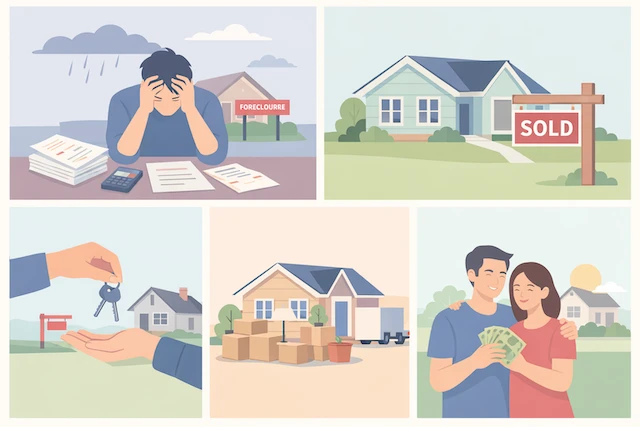
Facing foreclosure can feel overwhelming, especially when time is limited and options seem unclear. Missed mortgage payments, mounting fees, and constant lender notices can quickly create pressure that’s hard to manage alone.
The good news is that foreclosure doesn’t mean you’re out of options. In many cases, homeowners can still take control of the situation and sell their property before things escalate further. Knowing how to act quickly—and strategically—can help you avoid long-term financial damage and move forward with less stress.
In this guide, we’ll walk you through how to sell your home fast when facing foreclosure, what your best options are, and how to make the right decision based on your situation.
What Happens When You’re Facing Foreclosure?
Before deciding how to sell, it helps to understand what foreclosure actually involves.
Foreclosure is a legal process that begins when you fall behind on your mortgage payments. After several missed payments, your lender may issue a notice of default and begin steps to take ownership of your property.
Key stages of foreclosure
Missed payments
Typically begins after 90 days of non-payment.
Notice of default
Your lender formally notifies you of delinquency.
Pre-foreclosure period
This is your window to take action—sell, refinance, or negotiate.
Auction or repossession
If unresolved, the property may be sold at auction or taken by the bank.
The most important takeaway is this: you still have control during pre-foreclosure. Acting early gives you more flexibility and better outcomes.
Why Selling Fast Is Often the Best Option
When foreclosure is looming, time is your biggest asset. Selling quickly can help you avoid serious consequences.
Avoid long-term credit damage
A completed foreclosure can stay on your credit report for up to seven years. Selling your home before that happens can significantly reduce the impact.
Prevent additional fees
Late fees, legal costs, and penalties add up fast. A quick sale helps you minimize these expenses.
Walk away with cash
Depending on your home’s value, you may still walk away with equity after paying off your mortgage.
Reduce stress and uncertainty
The faster you resolve the situation, the sooner you can move forward without constant pressure from lenders.
Your Options for Selling a Home in Foreclosure
Not all selling methods work well under tight deadlines. Let’s break down your main options.
Traditional listing with an agent
Selling through a real estate agent can work, but it comes with challenges.
Pros
- Potentially higher sale price
- Wider market exposure
Cons
- Can take months to sell
- Requires repairs, showings, and staging
- Agent commissions and closing costs
If time is limited, this option may not move fast enough.
Selling your home as-is
Selling as-is means you don’t make repairs or upgrades before selling.
This approach is often ideal for homeowners dealing with foreclosure, especially if the property needs work.
If you’re unsure how this compares financially, this comparison of selling as-is vs fixing your home can helps clarify which route makes more sense.
Selling to a cash home buyer
Cash buyers specialize in fast transactions and typically purchase homes in any condition.
Why this option works best in foreclosure
- No repairs required
- No showings or open houses
- Faster closing timelines (often 7–14 days)
- Fewer contingencies that can delay the deal
If speed is your priority, this is usually the most practical route.
Step-by-Step: How to Sell Your Home Fast Before Foreclosure
Taking the right steps early can make all the difference.
Step 1: Understand your timeline
Contact your lender and confirm how much time you have before foreclosure progresses. This helps you plan realistically.
Step 2: Determine your home’s value
Even in a rushed situation, you need a rough idea of your property’s worth. This ensures you don’t accept an unfair offer.
Step 3: Decide how quickly you need to sell
If you have weeks—not months—your strategy should prioritize speed over maximizing price.
Step 4: Explore fast-sale options
Working with a direct buyer can simplify the process significantly and could sell for right away.
Step 5: Review and accept the right offer
Look beyond just the price. Consider:
- Closing timeline
- Fees or hidden costs
- Flexibility on move-out date
Step 6: Close and move forward
Once you accept an offer, the closing process can be completed quickly, allowing you to resolve your mortgage and avoid foreclosure.
Common Mistakes to Avoid
When time is tight, it’s easy to make rushed decisions. Here are some pitfalls to watch for.
Waiting too long
Delaying action reduces your options and increases pressure. The earlier you act, the better your outcome.
Overpricing your home
Setting an unrealistic price can slow down the sale and cost you valuable time.
Investing in unnecessary repairs
If your goal is to sell quickly, major renovations often don’t provide a return within a short timeframe.
Choosing the wrong buyer
Not all buyers can close quickly. Always verify their ability to complete the transaction.
Special Situations That Require Fast Selling
Foreclosure is often tied to other life events. Understanding these scenarios helps you make better decisions.
Inherited properties
If you’ve inherited a home and can’t maintain payments, selling quickly may be the best option.
Homes with major damage
Properties with structural issues or deferred maintenance are harder to sell traditionally. In these cases, selling as-is becomes even more valuable.
How Fast Can You Really Sell a House?
Speed depends on your chosen method.
Traditional sale timeline
- 30–90+ days on average
Cash buyer timeline
- As little as 7–14 days
If you’re already behind on payments, faster options are usually the safest.
Signs You Should Act Immediately
Not sure if it’s time to sell? Watch for these warning signs:
- You’ve missed multiple mortgage payments
- You’ve received a notice of default
- You’re struggling to cover basic home expenses
- You’re relying on credit to stay afloat
If any of these apply, it’s worth exploring your options now rather than later. You can also review common indicators in this overview of signs it’s time to sell your South Florida home.
Final Thoughts: Take Control Before It’s Too Late
Facing foreclosure is stressful, but it doesn’t have to define your financial future. The key is to act early, understand your options, and choose a strategy that aligns with your timeline.
Selling your home fast—especially as-is—can help you avoid long-term damage, reduce stress, and move forward with a clean slate.
The sooner you take action, the more control you’ll have over the outcome.