
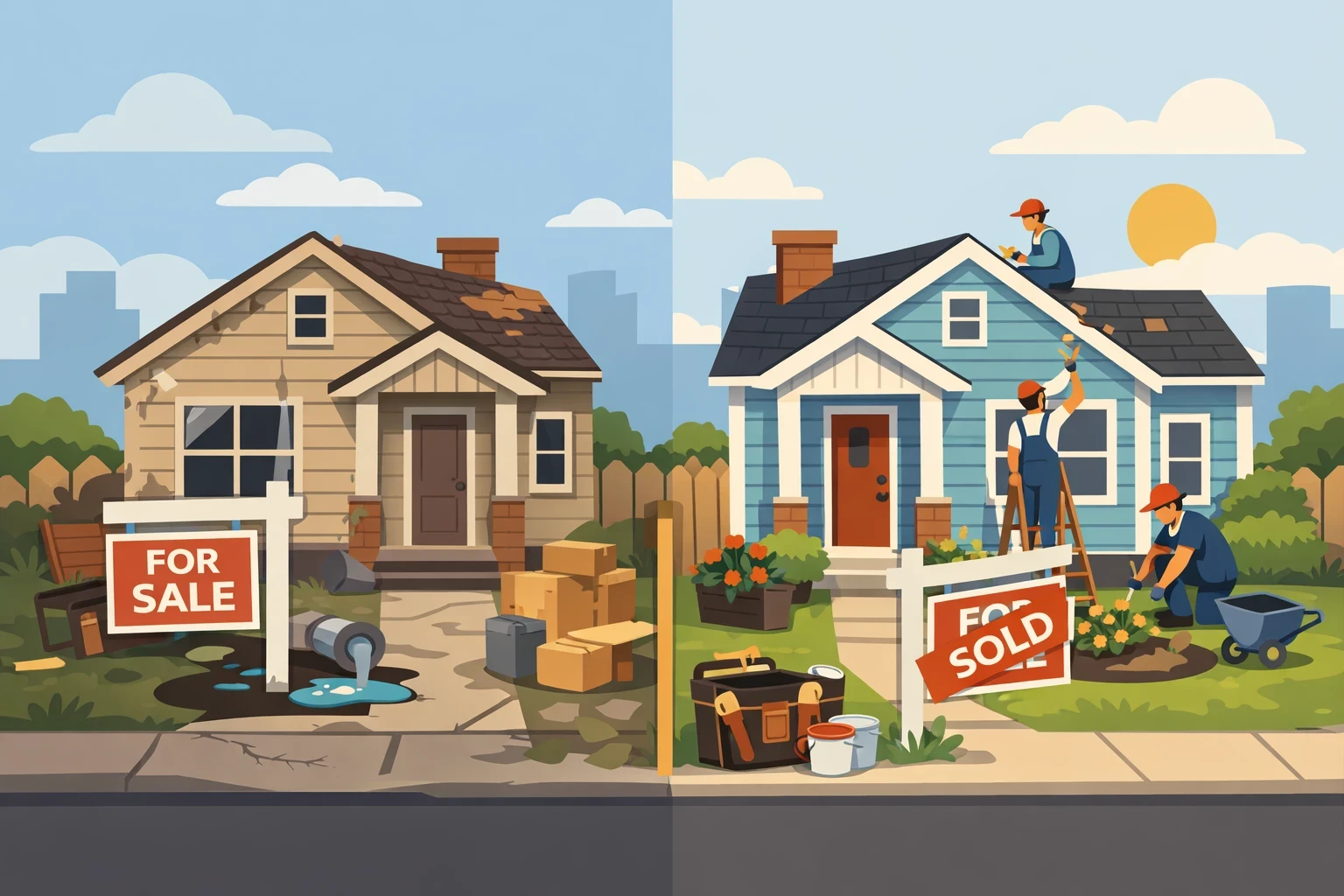
Selling a home always comes down to one big question: should you fix it up first or sell it as-is? If your property needs work, this decision can directly impact how much money you walk away with—and how stressful the process becomes.
For many homeowners, especially those dealing with time constraints, costly repairs, or life changes, the traditional “fix and list” route isn’t always the smartest financial move. In this guide, we’ll break down the real numbers, hidden costs, and practical considerations so you can decide what actually saves more money in your situation.
What Does Selling a House As-Is Mean?
Selling a house as-is means you’re putting the property on the market in its current condition—no repairs, no upgrades, and no staging required.
What You Can Expect
- Buyers accept the home in its present state
- You don’t need to fix structural or cosmetic issues
- The price reflects the home’s condition
This option is especially common for homeowners dealing with inherited properties, aging homes, or situations where time and budget are limited.
If you want a deeper look at how this process works in real scenarios, this guide on how to sell your house fast without repairs explains the steps in a straightforward way.
What Does Fixing Your Home Before Selling Involve?
Fixing your home before listing typically means preparing it to meet buyer expectations in the traditional real estate market.
Common Pre-Sale Improvements
- Roof repairs or replacement
- Plumbing or electrical updates
- Interior repainting and flooring upgrades
- Kitchen and bathroom renovations
- Landscaping and curb appeal improvements
While these upgrades can increase your asking price, they also require upfront investment—and there’s no guarantee you’ll recover every dollar spent.
The Real Cost of Fixing a House Before Selling
At first glance, repairing your home seems like the logical path to maximize value. But the real cost goes far beyond the contractor’s invoice.
Upfront Financial Investment
Repairs can quickly add up. Even minor updates often run into thousands of dollars, while major renovations can cost tens of thousands.
Hidden Costs Most Sellers Overlook
Carrying Costs
While repairs are ongoing, you’re still paying:
- Mortgage payments
- Property taxes
- Utilities
- Insurance
Time Delays
Renovations rarely stay on schedule. Delays can push your sale timeline by weeks or even months.
Market Risk
The longer you hold onto the property, the more you’re exposed to market fluctuations. A declining market can erase the added value from your repairs.
The True Cost of Selling As-Is
Selling as-is usually involves accepting a lower offer compared to a fully renovated home—but that doesn’t always mean you lose money.
Where You Save
No Repair Costs
You avoid spending thousands upfront.
Faster Closing
Many as-is sales close quickly, reducing holding costs.
No Agent Commissions (in some cases)
Selling directly to a buyer can eliminate listing fees and commissions.
Less Stress and Uncertainty
There are fewer moving parts, which means fewer chances for deals to fall through.
If you’re unsure whether your situation leans toward selling as-is, understanding signs if it’s time to sell your home can help you evaluate your position.
As-Is vs Fixing: Side-by-Side Comparison
Selling As-Is
- Lower sale price
- No upfront repair costs
- Faster timeline
- Minimal effort
- Lower risk
Fixing Before Selling
- Higher potential sale price
- High upfront costs
- Longer timeline
- More effort and coordination
- Higher risk if market shifts
The key takeaway is simple: a higher sale price doesn’t always mean higher profit.
When Selling As-Is Saves You More Money
There are specific situations where selling as-is is clearly the better financial decision.
1. Major Repairs Are Needed
If your home has structural issues, foundation problems, or outdated systems, repair costs can exceed the value they add.
2. You Need to Sell Quickly
Time-sensitive situations like relocation, financial pressure, or life transitions often favor a faster, simpler sale.
3. You Don’t Have Cash for Repairs
Not every homeowner has the liquidity to invest in renovations before selling.
4. The Property Is a Burden
Vacant homes, inherited properties, or rentals with difficult tenants can quickly become costly liabilities.
5. You Want Predictability
Selling as-is reduces uncertainty, making it easier to plan your next move.
When Fixing Your Home Might Make Sense
There are still cases where repairs can increase your net profit.
1. The Repairs Are Minor
Cosmetic updates like paint, lighting, and landscaping can offer a strong return on investment.
2. You’re in a Strong Seller’s Market
If demand is high, upgraded homes can attract premium offers.
3. You Have Time and Budget
If you’re not under pressure and can afford the investment, improvements may pay off.
4. The Home Is Structurally Sound
Homes without major issues are better candidates for pre-sale upgrades.
The Emotional and Practical Side of Selling
Financial numbers matter, but so does your experience during the process.
Selling As-Is Feels Simpler
You skip:
- Contractor coordination
- Unexpected repair surprises
- Repeated showings
Fixing First Can Be Overwhelming
Managing renovations while preparing for a move can quickly become stressful.
For many homeowners, the reduced stress alone makes selling as-is worth it—even if the offer is slightly lower.
Real Example: Which Option Actually Saves More?
Let’s break down a simple scenario.
Option 1: Fix Before Selling
- Repair costs: $25,000
- Final sale price: $300,000
- Agent fees (6%): $18,000
- Holding costs: $5,000
Net: $252,000
Option 2: Sell As-Is
- No repair costs
- Sale price: $260,000
- Minimal fees
- Faster closing
Net: $260,000
Even with a lower sale price, the as-is option results in more money in your pocket.
A Smarter Way to Evaluate Your Options
Instead of focusing only on the sale price, consider:
- Total costs involved
- Time required to sell
- Risk of delays or deal fall-through
- Your personal situation and priorities
Every property is different, which is why getting a clear, no-obligation offer can help you compare both paths realistically.
If you want to see what your home could sell for without repairs, you can start by requesting a quick estimate directly.
Alternative Options You Might Not Have Considered
Not every homeowner needs to sell immediately. Depending on your goals, you may have other options.
Turn It Into a Rental
If your property is in a desirable area, renting it out could generate income. Vacation rental can help handle operations if you don’t want to manage it yourself.
Sell Later, Strategically
If the market is expected to improve and you’re not in a rush, waiting could increase your property’s value.
What Truly Saves You More?
There’s no universal answer—but there is a smarter way to decide.
If your home needs significant repairs, you’re short on time, or you want a straightforward process, selling as-is often results in more money and less stress.
If your home is in good condition and you have the time and budget, making selective improvements could increase your return.
The key is to look beyond the listing price and focus on your net outcome.