
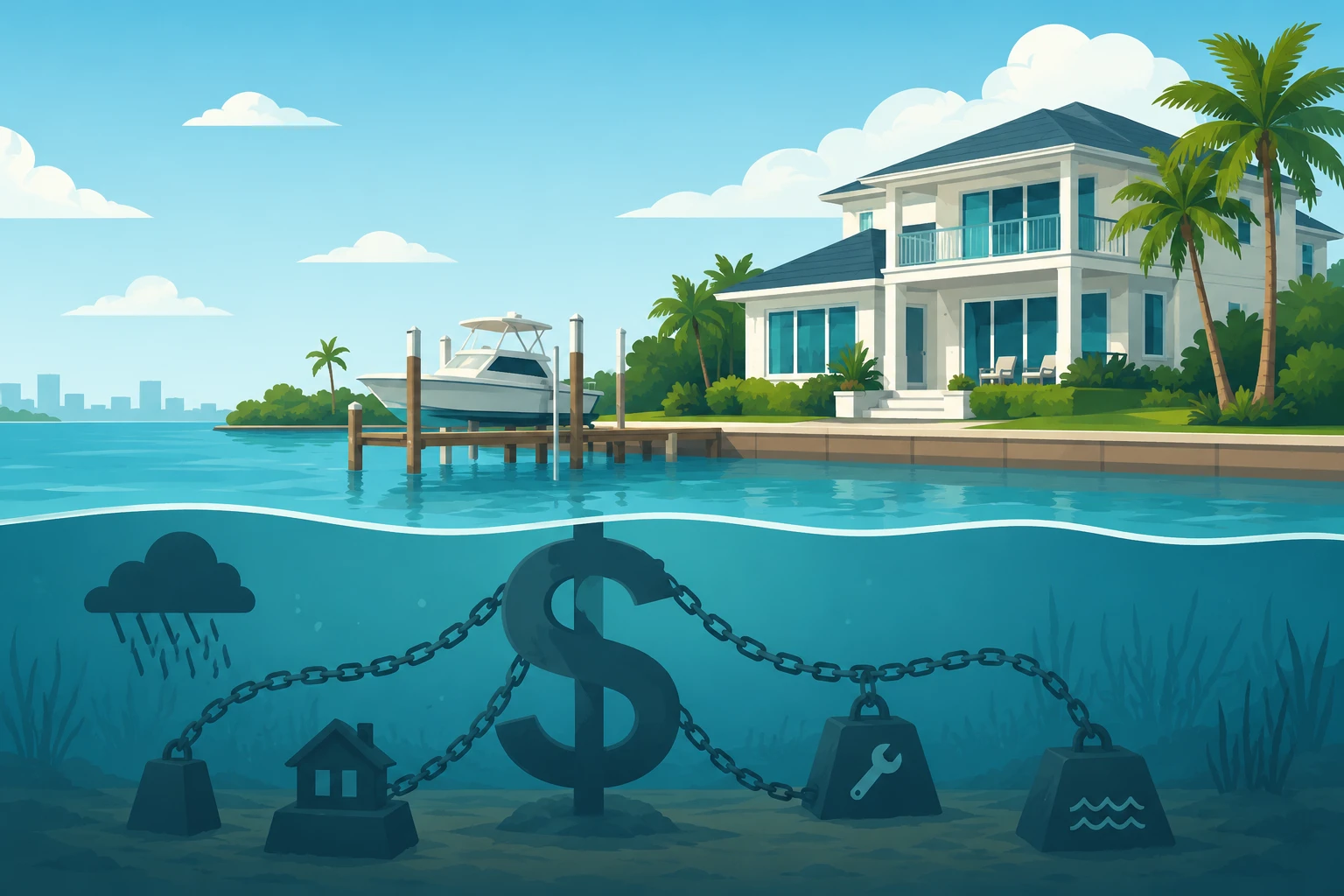
Florida waterfront homes have obvious appeal. The views are dramatic, the lifestyle feels elevated, and the resale story can be strong when you buy the right property in the right location. But buyers who focus only on list price often underestimate the true cost of ownership. On the coast, on an inlet, or along an intracoastal canal, the budget math changes.
If you are shopping for a waterfront property in Florida, the goal is not to be scared away. The goal is to buy with clear eyes. A beautiful home can still be a smart move, but only when you understand the full financial picture before you close.
Why waterfront pricing works differently in Florida
In many Florida markets, buyers are not just paying for square footage. They are paying for scarcity, access, views, boating convenience, and a specific lifestyle. Two houses with similar layouts can have dramatically different values if one sits inland and the other sits on open water or a deep-water canal.
That premium is only the beginning. The location also affects insurance, maintenance schedules, storm preparation, and even the lifespan of exterior materials. Salt air, humidity, intense sun, and wind exposure all create ongoing costs that may not show up clearly in the initial listing.
For that reason, waterfront buyers need to think beyond mortgage qualification. They need to think like long-term owners.
Start with the full monthly payment, not just the sale price
A waterfront home that looks affordable at first glance can become uncomfortable once the true monthly obligations are added up. Before you fall in love with a property, build a realistic ownership estimate that includes:
- Principal and interest
- Property taxes
- Homeowners insurance
- Flood insurance
- HOA or condo fees if applicable
- Utility costs
- Routine maintenance reserves
- Dock or seawall upkeep if relevant
This approach matters because some Florida buyers stretch for the purchase and then feel blindsided by recurring expenses. A safer plan is to set a monthly comfort number first, then shop inside it.
Related: Selling Waterfront Property in South Florida Right
Insurance is often the biggest surprise
Insurance is one of the most important cost categories for waterfront homes in Florida. Depending on the property, you may be dealing with multiple layers of coverage, including standard homeowners insurance, wind-related coverage, and flood insurance.
Homeowners insurance can be higher near the coast
Insurers evaluate risk based on location, building age, roof condition, claims history, and storm exposure. Homes closer to the water, especially in storm-prone zones, may face higher premiums or tighter underwriting.
Flood insurance deserves close review
Not every waterfront home carries the same flood exposure. Elevation, flood zone classification, and construction details matter. Some properties require flood insurance for financing. Others may not require it but still make it a wise purchase.
The key is to get insurance quotes early, ideally before you are fully committed to a contract strategy. A property that seems attractive can lose its appeal quickly if annual premiums come in far above expectations.
Property taxes may reset higher than expected
Florida property tax rules can create confusion for buyers moving from out of state or stepping up into a more expensive home. The seller’s current tax bill may not reflect what you will pay after the purchase. If the home has appreciated significantly or has homestead-related differences, taxes can reset at a higher basis.
That means the tax amount shown on a listing or prior bill is not always a reliable forecast for your ownership cost. Smart buyers ask for an estimate based on the anticipated purchase price instead of assuming the prior owner’s tax number will carry over.
Salt air and moisture increase maintenance demands
Waterfront living is beautiful, but the environment is hard on houses. Salt accelerates corrosion. Moisture encourages mold risk if ventilation is poor. Intense UV exposure shortens the life of paints, sealants, and some finishes.
That means a waterfront property often needs more disciplined maintenance than a similar inland home.
Expect faster wear on exterior components
Keep a close eye on:
- Metal fixtures and hardware
- Outdoor lighting
- Railings and fasteners
- Garage doors and tracks
- HVAC components
- Windows and seals
- Exterior paint and coatings
This does not mean every waterfront home is a money pit. It means deferred maintenance is more expensive here. Buyers should inspect the property with extra attention to corrosion, moisture intrusion, roofing age, and exterior exposure.
Seawalls, docks, and boat lifts can change the budget fast
Not every waterfront property includes marine structures, but when they do, those structures become a major part of due diligence.
A dock may look like a lifestyle bonus. In practice, it is also an asset that needs inspection, repair planning, and ongoing upkeep. The same goes for seawalls, pilings, lifts, and waterfront decking.
Ask specific questions before closing
If the property includes marine features, find out:
- The age and condition of the seawall
- Whether repairs or reinforcement are anticipated
- The age and service history of the dock and lift
- Whether permits were properly obtained for improvements
- Whether dredging or access limitations affect usability
A neglected seawall or aging dock can become a five-figure or even six-figure problem. This is one of the clearest examples of why waterfront buyers need specialized inspections, not just a standard home inspection.
Renovation costs can run higher near the water
If you plan to update the kitchen, add outdoor living areas, replace windows, or remodel major systems, your costs may be higher than expected. Coastal code requirements, material durability needs, and contractor demand in desirable areas can all raise project pricing.
Homes in wind-sensitive areas may require impact-rated upgrades or stricter installation standards. If your dream property needs work, build in margin. Underestimating renovation costs is one of the fastest ways to turn a good purchase into a stressful one.
Lifestyle costs matter too
Waterfront ownership often comes with spending patterns that buyers do not always consider in the purchase phase. You may want upgraded outdoor furniture, pool service, dock maintenance, landscaping, or boating-related expenses. If the property is part of a luxury community, there may also be club fees or elevated service expectations.
None of these are inherently negative. They are part of the package. The point is to match the property not only to your borrowing power, but also to your preferred lifestyle budget.
What smart buyers do before making an offer
Waterfront buyers who make strong decisions usually slow down and verify more than inland buyers do. They ask sharper questions and involve the right experts earlier.
Build a waterfront-specific due diligence checklist
A practical checklist should include:
- Insurance quotes before final commitment
- Flood zone review
- Roof age and condition verification
- HVAC age and corrosion review
- Moisture and mold evaluation where warranted
- Seawall and dock inspection if applicable
- Permit history check for additions or exterior improvements
- Tax estimate based on purchase price
- HOA document review if the property is in a managed community
This process helps you compare properties on real ownership cost, not emotion alone.
When a waterfront home is worth the premium
A Florida waterfront home can absolutely be worth the added expense when the property aligns with your goals. If you want long-term enjoyment, understand the upkeep, and buy in a location with stable demand, the premium can be justified.
The best purchases usually share a few traits:
- The buyer has sufficient cash reserves after closing
- Insurance costs were reviewed in advance
- Major structural and marine components were inspected carefully
- The location supports long-term desirability
- The home fits both present use and future resale logic
In other words, the smartest buyers do not chase a dream blindly. They buy a lifestyle with a plan.
Final thoughts
Buying a waterfront home in Florida is not just about getting a better view. It is about understanding a different ownership model. The right property can deliver years of enjoyment and strong market appeal, but the wrong assumption about taxes, insurance, or maintenance can put unnecessary pressure on your finances.
The most successful buyers treat waterfront real estate as a premium asset that deserves premium due diligence. When you run the numbers honestly and inspect the property thoroughly, you can move forward with confidence instead of surprises.
FAQ
Are waterfront homes in Florida always more expensive to maintain?
Usually, yes. Salt air, wind exposure, humidity, and water-adjacent structures often create higher maintenance needs than comparable inland homes.
Is flood insurance required for every waterfront property?
Not always, but many waterfront homes either require flood insurance for financing or strongly benefit from it based on location and exposure.
Should I get a separate inspection for the dock or seawall?
Yes. If the property includes marine structures, specialized inspections are a smart part of due diligence.
Can the seller’s current property tax bill predict my future taxes?
Not reliably. Taxes may reset after purchase, so buyers should estimate taxes based on the expected sale price.
Is a waterfront home still a good investment in Florida?
It can be, especially in strong locations with limited inventory and durable demand. The key is buying with realistic cost expectations and proper inspections.